A large number of homeowners who try to repair pet-damaged carpet themselves end up calling a professional anyway. Not because the job is impossible, but because pet damage is rarely what it looks like on the surface.
A single torn corner near a doorway often hides urine saturation in the padding below. What looks like light surface scratching can involve frayed backing that unravels further under foot traffic. The visible damage tends to be the smaller part of the problem, and that gap between what you can see and what’s actually happening underneath is exactly where DIY carpet repair runs into trouble.
This article walks through the most common types of pet-damaged carpet, explains what professional carpet repair actually involves at each stage, and helps you understand why the outcomes differ so significantly from typical store-bought patch kit results.
What Pet Damage Actually Does to Your Carpet
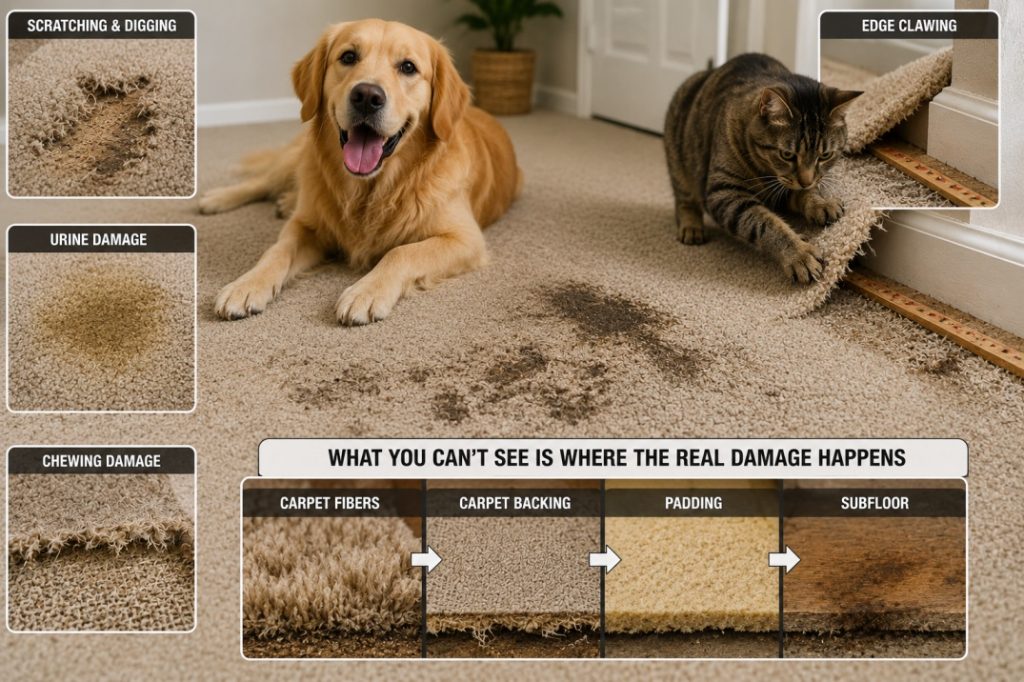
Cats and dogs damage carpet in predictably different ways. Dogs tend to scratch and dig near doorways, room corners, and along walls, particularly near exits when anxious. Cats claw and pull at carpet edges, often loosening or fully exposing the tack strip underneath. Both contribute to urine damage, and that is where the real technical complexity begins.
Urine does not stay at the fiber surface. It moves downward through the pile, through the primary and secondary backing, into the padding, and in cases of repeated exposure in the same area, into the subfloor material itself. The visible staining you see at eye level is typically the least structurally damaging part. The odor issues, padding deterioration, and subfloor contamination below are what make pet damaged carpet repair genuinely technical work.
Chewing damage creates a separate set of problems. When a dog chews through carpet backing, the structural integrity of that section deteriorates even if neighboring fibers look intact. The backing loses its ability to hold the weave in position, and the damage tends to creep outward if left unaddressed.
Why DIY Carpet Repair Consistently Falls Short
Hardware store carpet repair kits exist, and they handle very small, surface-level repairs in low-visibility areas adequately. Beyond that, they carry real limitations.
Texture and color matching is harder than it looks. Carpet fibers vary significantly by cut height, twist level, fiber type, and density. Even within the same product line, carpet produced across different dye lots or manufacturing years looks noticeably different once installed. When a homeowner cuts a patch from an unrelated remnant or from a closet piece that has aged differently than the main floor, the repair stands out. Color and texture rarely align without professional assessment.
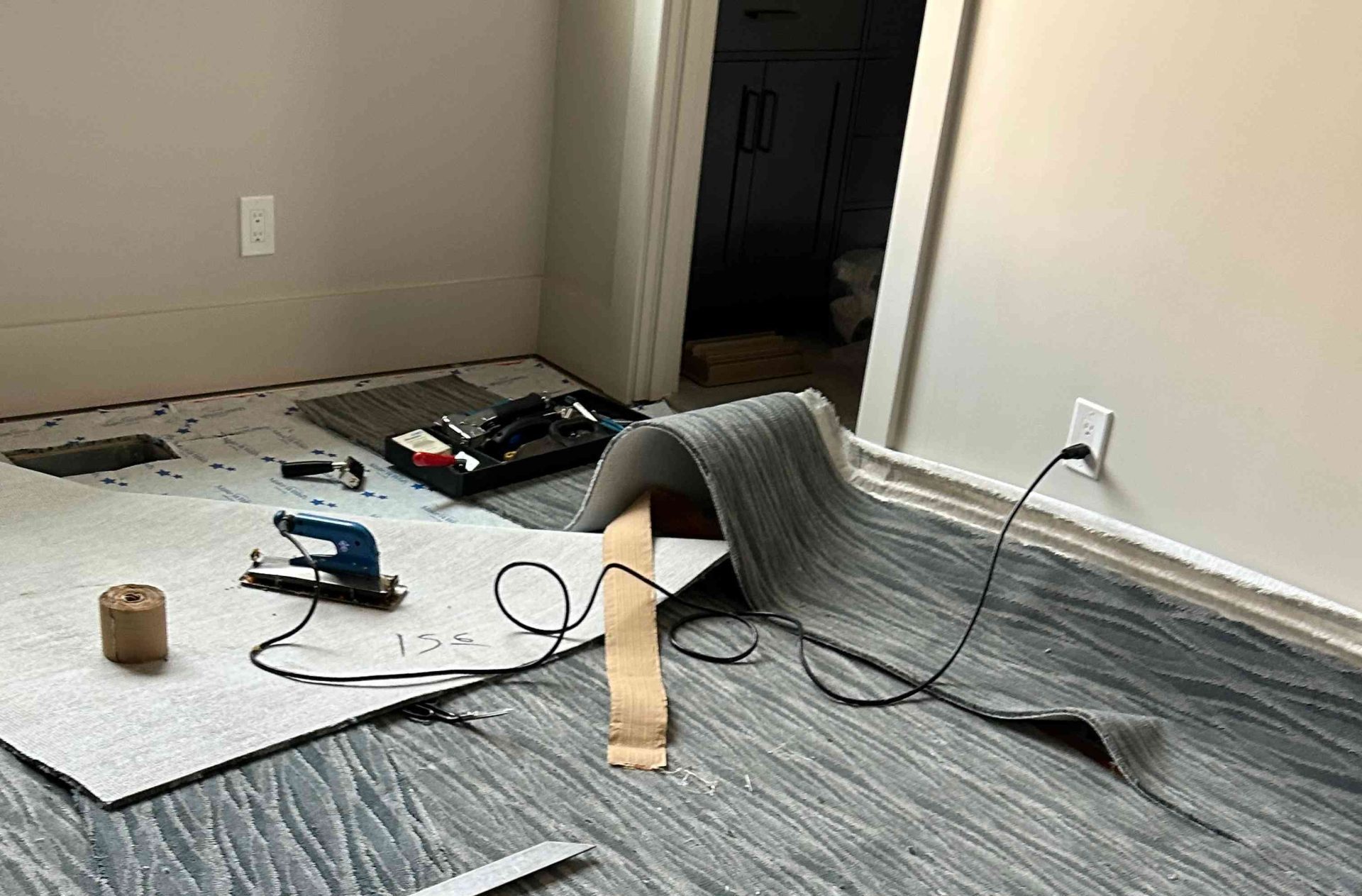
Seam integration requires specific tools and technique. Cutting out damaged carpet and replacing it with donor material requires creating seams that lay flat, hold under traffic, and resist separation over time. Professional carpet repair technicians use hot-melt seaming tape, proper seam irons, and seam sealer applied at precise temperatures. Without these tools, even well-intentioned repairs tend to lift, pull apart, or bubble within weeks.
DIY repair addresses the surface and stops there. It leaves damaged padding in place. It does not treat subfloor contamination from urine crystallization. A carpet that has been patched at the surface but still carries heavy urine saturation in the padding below will continue producing odor indefinitely, regardless of how clean the surface looks.
What Professional Pet Damage Carpet Repair Actually Involves
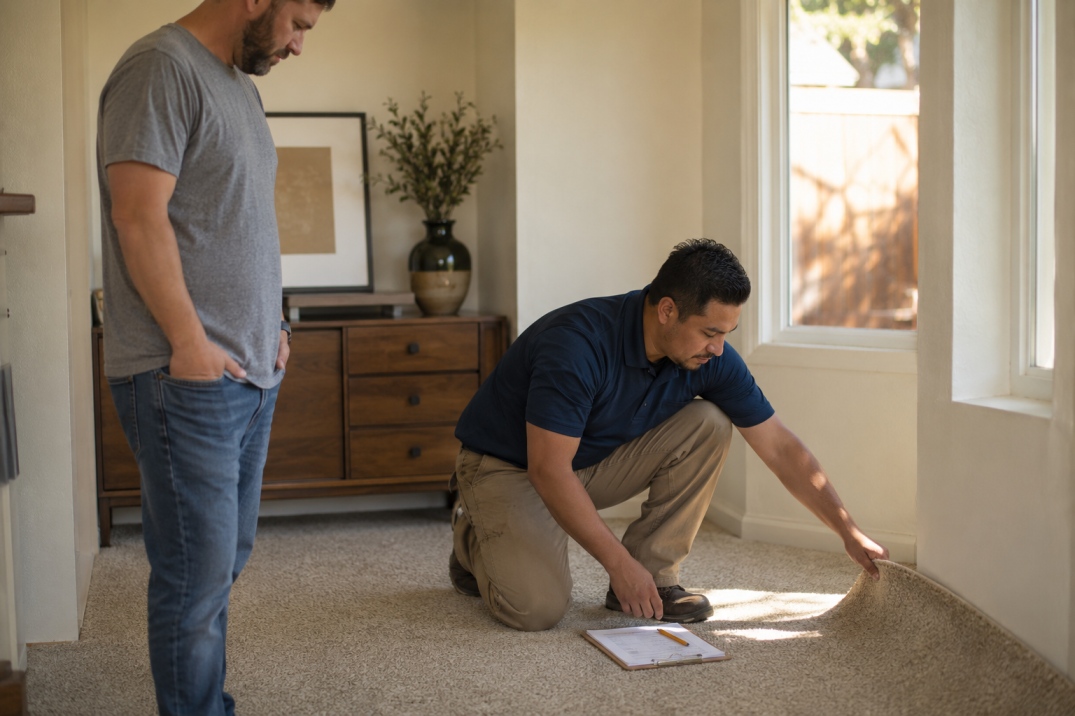
A professional carpet repair technician approaches pet-damaged carpet differently than most homeowners expect. The assessment starts below what you can see.
For urine damage, the technician evaluates whether padding needs replacement in the affected zone and whether the subfloor shows staining or odor absorption. In cases of significant contamination, sections of padding are removed and replaced before any surface work takes place. The subfloor may receive enzymatic treatment or a sealant application before new padding and carpet are laid down. Skipping these steps produces a visually repaired carpet that continues to smell because the odor source was never touched.
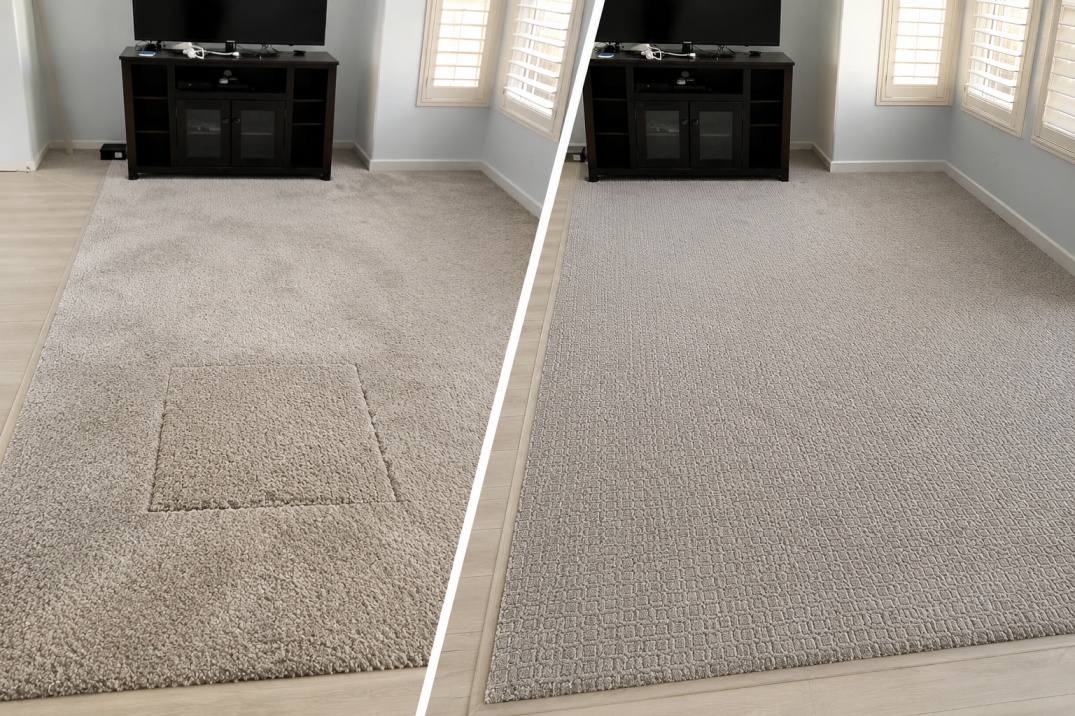
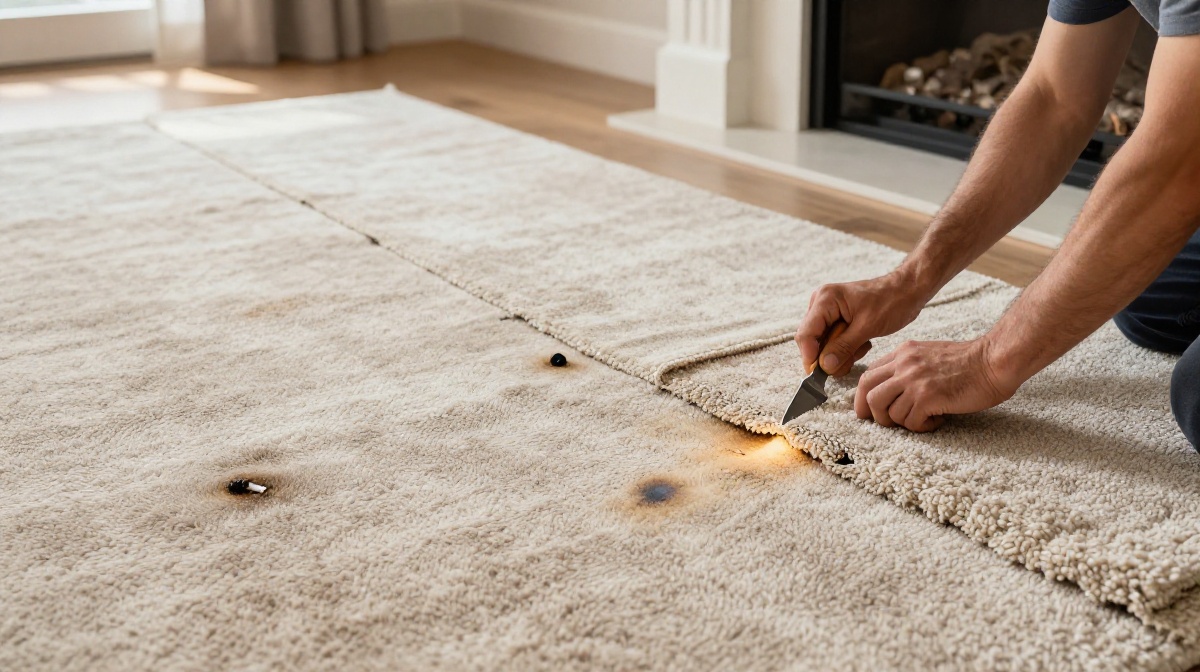
For tear, scratch, and chewing damage, the process typically involves carpet patch repair. A matching section of donor carpet is sourced, ideally from a remnant saved during the original installation, a cut taken from inside a closet, or a material the technician identifies as a close structural and color match. The damaged section is cut out cleanly, the donor piece is trimmed to precise dimensions, and a hot-melt seam is created to integrate the patch into the surrounding carpet. Pile direction must align. Texture density must match. Seam placement is chosen carefully to minimize visibility under typical lighting conditions.
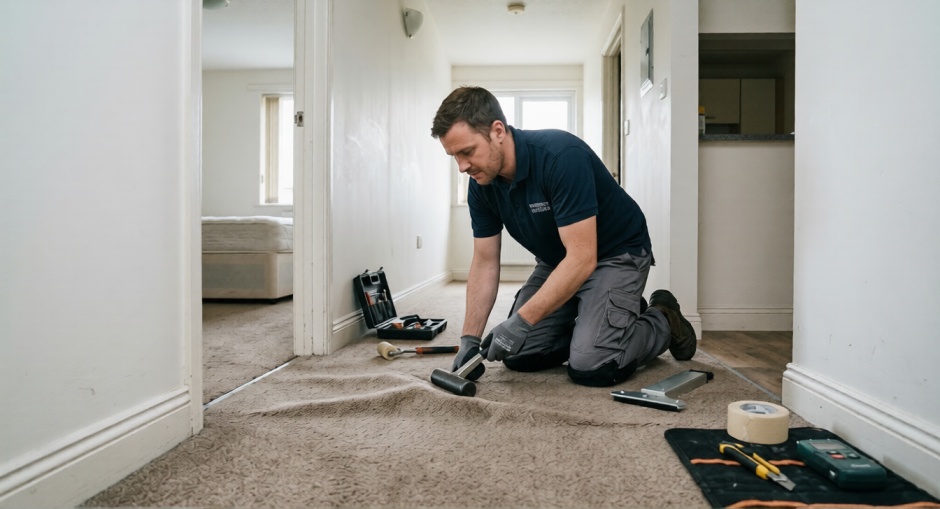
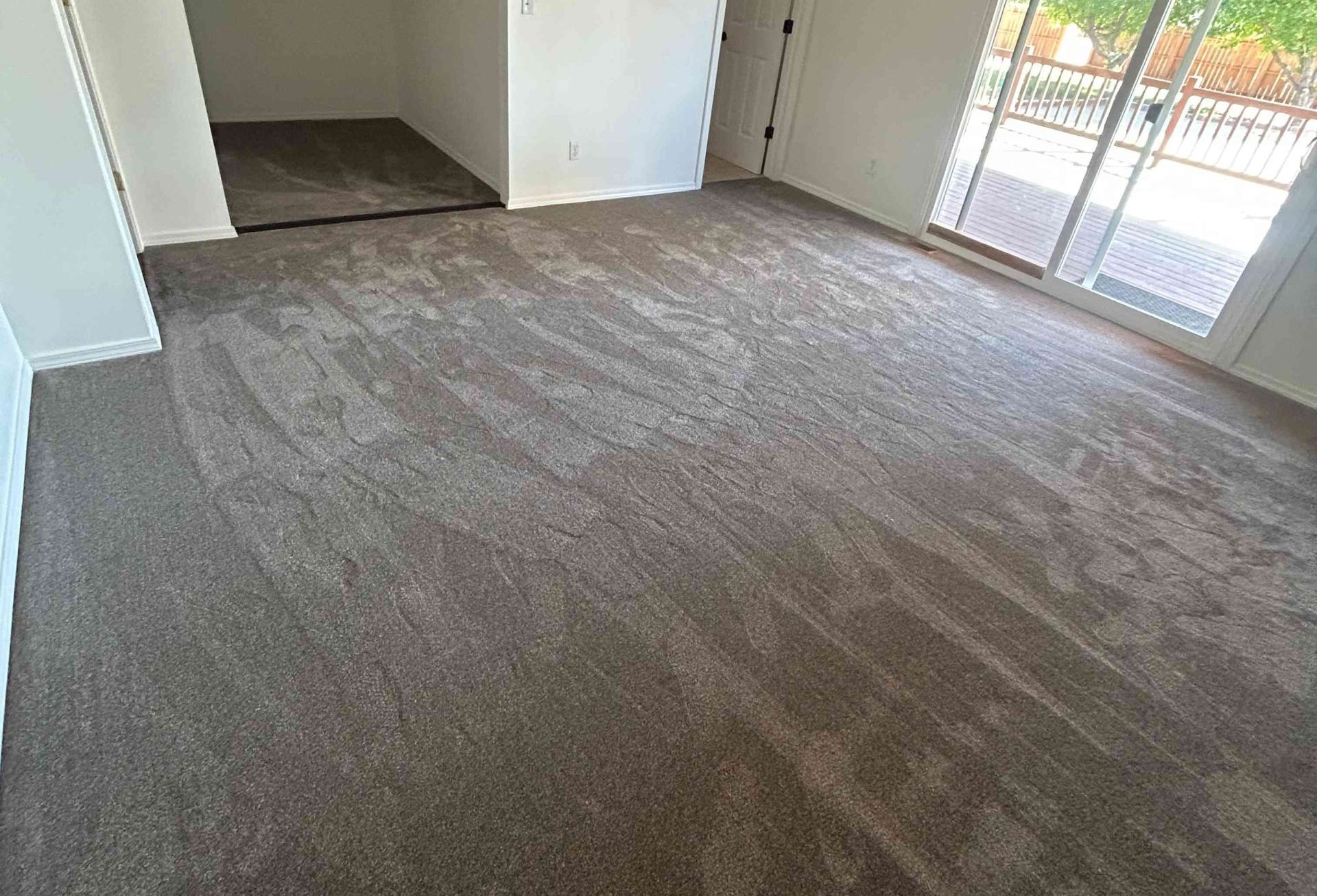
For scratching damage near doorways and along walls, re-stretching is often required alongside patching. Repeated scratching at door transitions loosens carpet from tack strips and creates rippling in the surrounding area. A power stretcher restores tension and eliminates the buckling that makes repaired areas look mismatched. See how our carpet restretching services Nevada work alongside patching to restore the full appearance of pet-damaged areas.
Carpet Fiber Types Respond Differently to Pet Damage
Understanding how your carpet’s fiber type responds to pet activity helps set realistic expectations for repair outcomes.
Nylon holds up better to scratching and recovers more predictably under repair conditions. Its resilience means donor patches tend to blend reasonably well when texture and color are matched carefully. It is the most repairable fiber type under professional conditions.
Polyester is softer but less resilient. Once polyester fibers are permanently matted or pulled from heavy pet activity, they do not recover the way nylon does. Patching polyester is possible, but fiber compression in the surrounding area can make a well-executed patch look slightly elevated relative to crushed neighboring fibers.
Berber looped carpet is particularly vulnerable to cat claw damage because a single snag can unravel a long run of loop. Pet damage to Berber requires prompt attention. Repair involves matching loop structure precisely, and the sooner a technician can address the damage, the less the unraveling extends beyond the original snag point.
Olefin (polypropylene) resists moisture and urine absorption better than most fibers, which can simplify odor remediation. However, olefin crushes easily under concentrated pressure and does not respond well to heat, which limits some seaming options.
Knowing your carpet’s fiber construction, a detail the Carpet and Rug Institute covers in depth within their care and maintenance standards, helps both homeowners and technicians select the right repair approach.
Repair vs. Replacement: How to Make the Right Call
This is the question most homeowners arrive at, and the honest answer depends on damage scope, carpet age, and how much of the floor is actually affected.
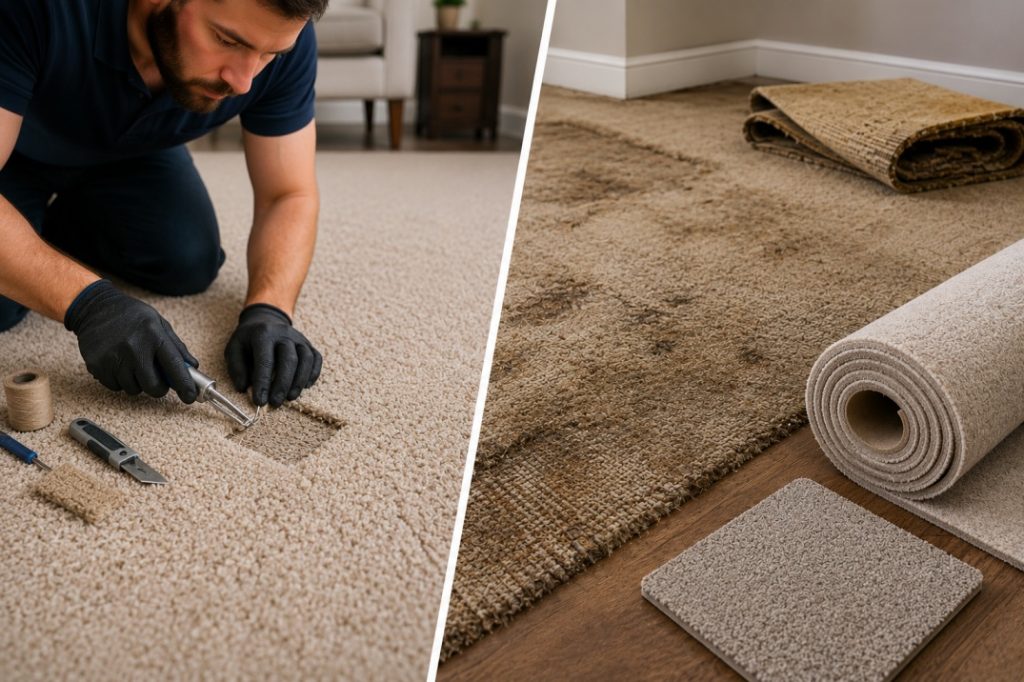
Single-area damage in an otherwise sound carpet is almost always worth repairing professionally. A torn corner, a cluster of scratches near a single door, a urine spot that has not spread significantly — these are repairs that produce clean results and extend carpet life by several years. The cost of professional pet damage carpet repair is typically a fraction of full replacement.
Replacement becomes the more practical option when: carpet shows heavy wear, brittleness, or widespread pile loss from age; urine saturation has spread across multiple rooms or large sections of the same room; the backing has deteriorated to the point where patches will not hold; or the carpet is already ten to fifteen years old with significant traffic wear in high-use areas. Repairing an aging floor that will need replacement within a year or two is rarely the best use of the investment.
Most reputable certified carpet repair technicians will tell you when replacement is the more sensible option rather than take a repair job that will not produce satisfying results. That kind of honest guidance is worth asking for.
What Realistic Results Look Like
Professional carpet patching, done well, produces repairs that are not visible at normal viewing distances. On low-pile carpet with good donor material, results are often genuinely seamless to anyone not actively searching for a seam. On higher-pile or patterned carpet, a close inspection may reveal seam lines, though the structural integrity and durability of the repair are still sound.
The realistic expectation is a functional, clean, visually restored result that extends the life of your floor without the cost of full replacement. For most homeowners dealing with localized pet damage in otherwise healthy carpet, that is exactly the outcome they need.
Request a pet damage repair assessment to get an honest look at what repair can realistically accomplish in your home.
FAQ: Pet Damaged Carpet Repair
Can pet urine carpet damage be repaired without replacing the entire floor?
In most cases, yes. When damage is localized, a technician can replace the affected padding, treat the subfloor if needed, and re-lay or patch the carpet above. Full replacement is typically only necessary when urine contamination has spread across most of the floor or the carpet itself has significant age-related deterioration alongside the damage.
How do carpet repair specialists match donor carpet to existing carpet?
They assess pile height, fiber type, color, and texture using remnants or closet cuts. When an exact match is unavailable, they select the closest possible material and choose seam placement to minimize visibility under typical lighting.
Does pet urine smell go away after professional carpet repair?
When padding replacement and subfloor treatment are included in the repair process, odor resolution is significantly more effective than surface-only approaches. Leaving the padding in place while patching the surface above leaves the primary odor source intact.
What types of pet carpet damage are easiest to repair professionally?
Localized scratching, isolated urine spots, and chewing damage concentrated in one section of a room are the most straightforward repairs. Widespread damage across multiple areas increases complexity and shifts the cost comparison closer to replacement.
Is carpet repair for pet damage worth it compared to full replacement?
For most homeowners with localized damage on carpet that still has functional life remaining, repair is the cost-effective answer. A professional assessment gives you an honest reading of whether repair or replacement makes more sense for your specific situation.