The question of whether to patch damaged carpet or replace it entirely is one that homeowners, landlords, property managers, and commercial operators face regularly, and the answer is rarely as straightforward as it first appears. Patching is dramatically more cost-effective in the right circumstances. Replacement is the correct decision for others. The difference between those two scenarios comes down to a clear set of factors that this guide walks through in full.
The confusion often starts because both options are presented as if they serve the same purpose. They do not. Carpet patch repair addresses localized damage in a specific area while leaving the rest of the floor intact. Full replacement addresses the entire floor, usually because the carpet as a whole has deteriorated to the point where targeted repairs no longer make sense as an investment. That distinction is the starting point.
What Carpet Patching Actually Involves
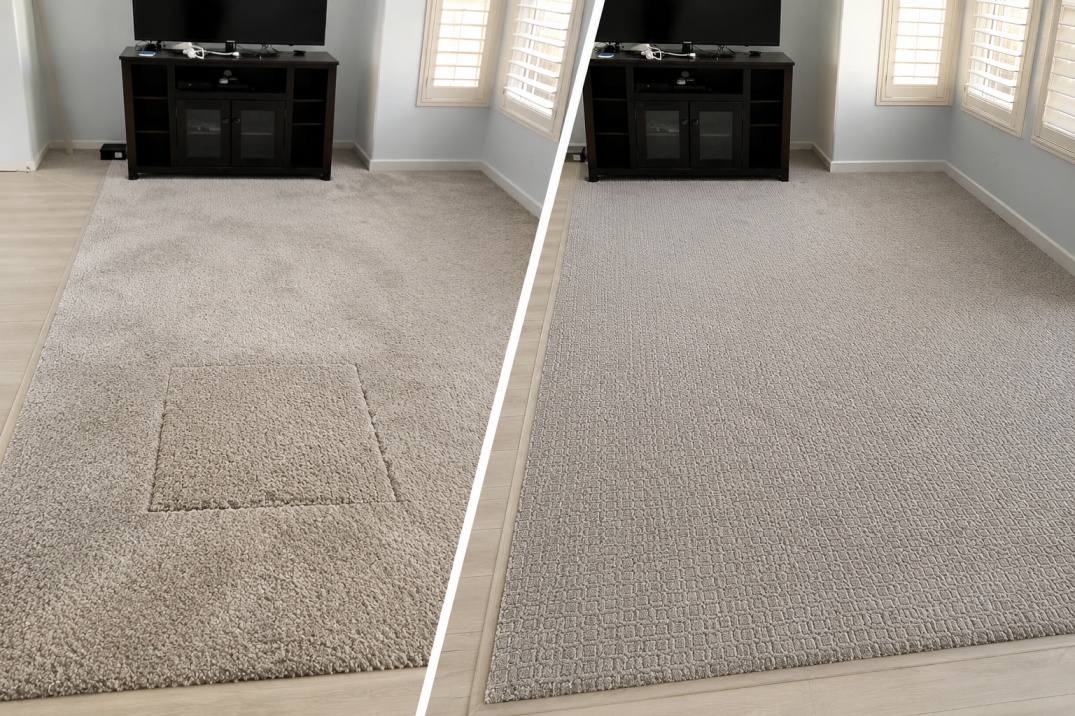
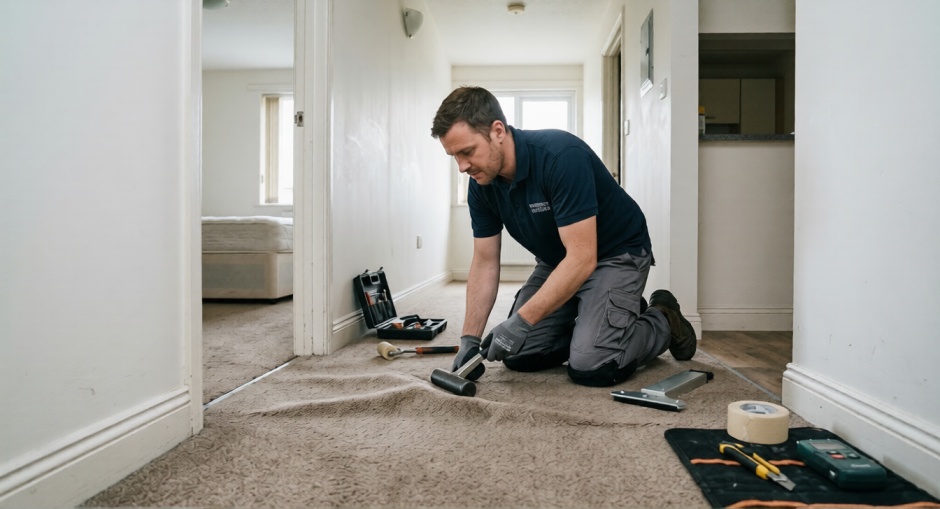
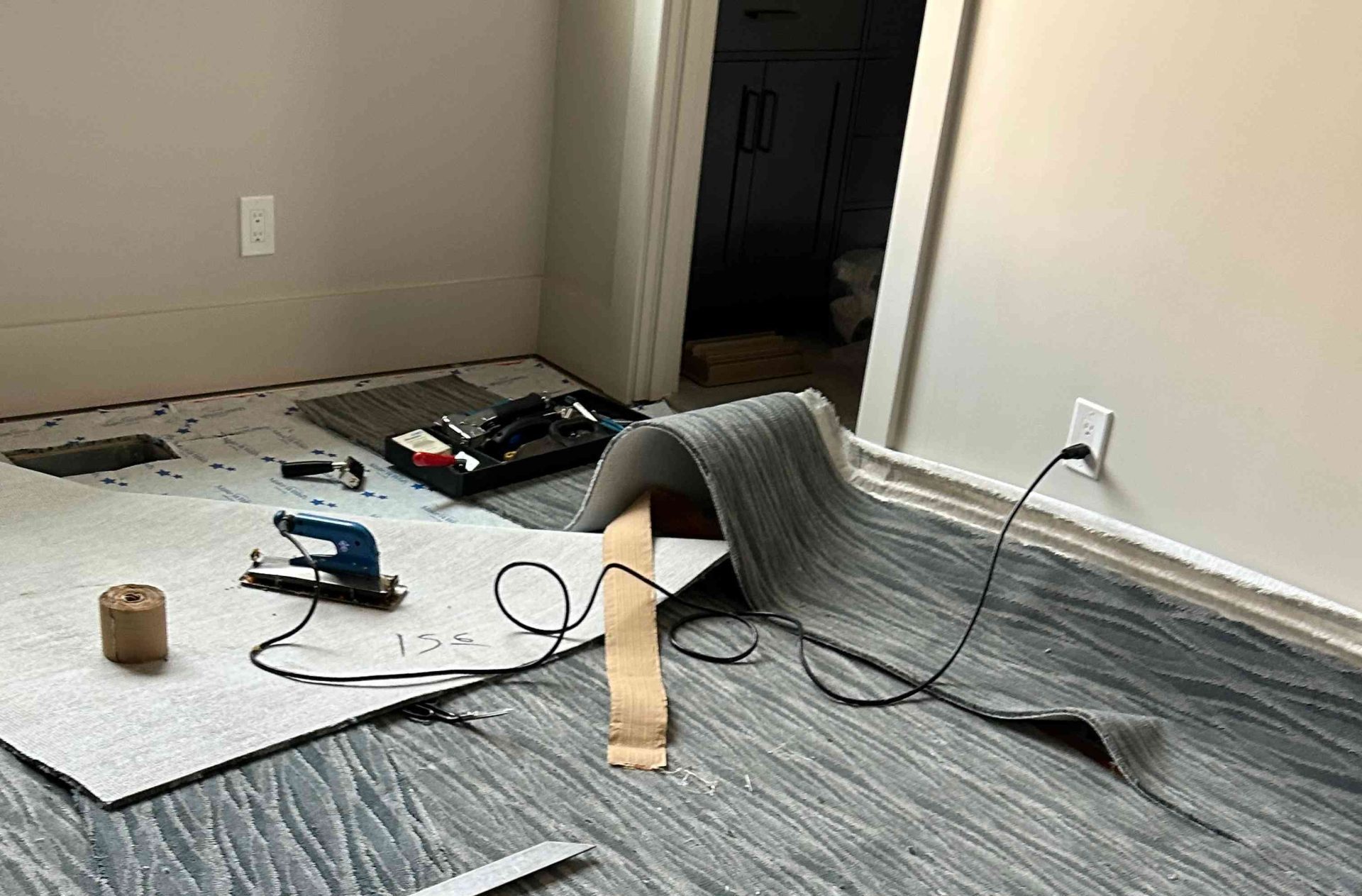
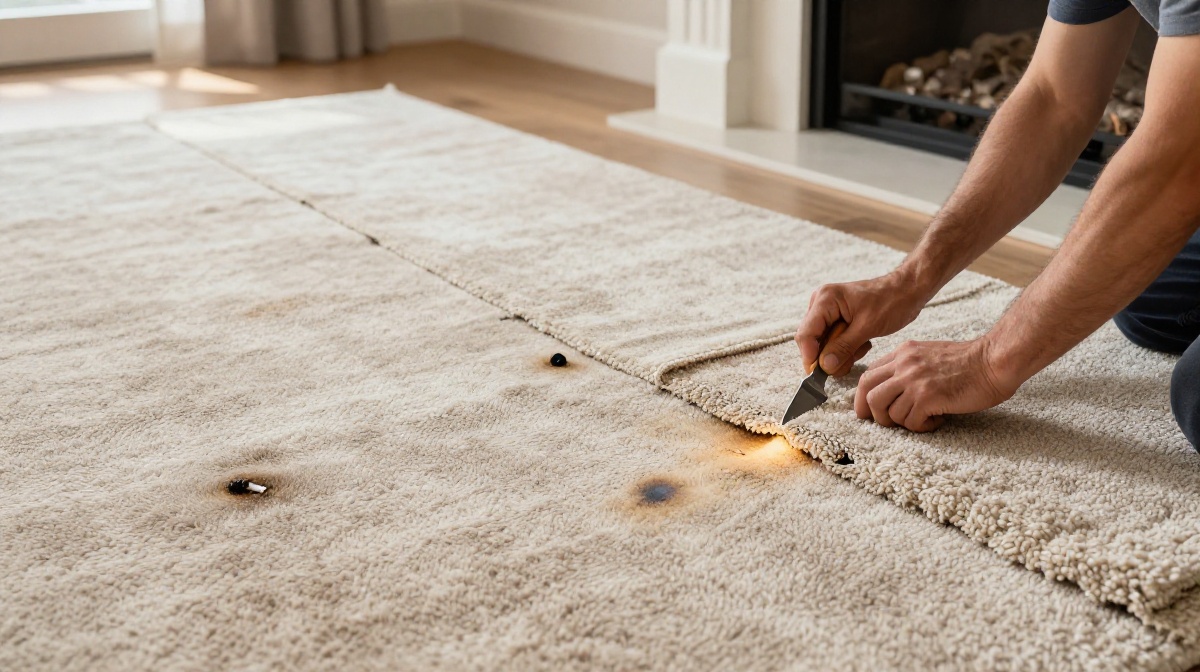
Carpet patching — sometimes called section replacement or carpet inlay repair — is a targeted technique in which a damaged section of carpet is removed and replaced with a closely matched piece of carpet material. The new section is cut to fit the void precisely, then bonded to the surrounding carpet using heat-activated seam tape, creating a join that blends with the surrounding pile when executed correctly.
A well-executed patch is difficult to detect when the replacement material closely matches in color, texture, pile height, and fiber direction. The quality of the result depends on two things above all else: the skill of the technician handling the seam edges and the quality of the material match. A poor color or texture match will be visible regardless of how cleanly the seam is cut.
Patching works best on cut-pile and plush carpets, which have a more forgiving pile structure around seam lines. Berber and looped-pile carpets require more careful handling at the seam edges to prevent unraveling, though they are patchable with the right tools and technique.
What Full Carpet Replacement Involves
Full carpet replacement involves removing the existing carpet and underlay entirely, disposing of the old material, installing new underlay, and fitting new carpet across the full area. It is a more disruptive, more expensive, and more time-consuming process than patching, but it produces a uniform, fresh result across the entire floor.
Replacement is the right answer when the carpet as a whole has reached end of life: widespread pile crush, delaminating backing, odor that has penetrated the underlay, or damage spread across so much of the floor that targeted repairs no longer make economic sense. It is also correct when you want to change the carpet style, color, or material entirely.
Our carpet replacement service handles full room and whole-property projects, including removal and disposal of old material and installation of new carpet and underlay. For localized damage, our targeted carpet repair service addresses the affected section without touching the rest of the floor.
The Direct Cost Comparison
Cost is the most immediate and tangible difference between the two options. Here is how they typically compare for residential applications:
| Factor | Carpet Patch Repair | Full Carpet Replacement |
| Average cost range | $175 – $400 per patch | $3 – $12+ per sq ft (material + labor) |
| Typical bedroom (200 sq ft) | N/A (patch only) | $1,800 – $3,500 total |
| Labor disruption | Low — 1 to 2 hours | High — half to full day |
| Furniture moving required | Minimal | Full room clearance required |
| Material waste | Minimal off-cut only | Full old carpet disposal |
| Result appearance | Near-invisible if matched well | Uniform new floor throughout |
| Best application | Localized, contained damage | Widespread wear or end-of-life carpet |
For a damaged area of 4 square feet or less on an otherwise serviceable carpet, patching costs a fraction of replacement and produces a result that is functionally indistinguishable from the surrounding floor when the match is good. That cost difference is not marginal; it is often $2,000 to $4,000 on a single room.
When Patching Delivers Better Value
The Carpet Has Clear Remaining Service Life
A carpet installed four to eight years ago that is in good overall condition — consistent pile density, sound backing, no widespread odor or matting, but has one damaged area from a pet, a dropped item, or a dragged piece of furniture is exactly the scenario patch repair was designed for. The rest of the carpet may have five to ten years of functional life remaining. Replacing it because of a two-square-foot damaged area discards that value entirely.
Patching extends the carpet’s total serviceable life without the cost and disruption of full replacement. From a financial standpoint, this is almost always the correct decision when the carpet’s overall condition supports it.
The Damage Is Confined to a Single Area
Patch repair is at its most effective when the damage is genuinely isolated. A burn mark, a pet damage zone, a torn edge near a transition strip, or a stained section that cleaning could not resolve — these are all contained problems with clear boundaries. A skilled technician can remove the damaged section cleanly, cut a replacement piece to fit precisely, and bond it in a way that blends with the surrounding carpet.
The more isolated and clearly bounded the damage, the better the patch repair outcome. Damage that is diffuse, spread across multiple areas, or covering a large percentage of the room starts to push the calculation toward replacement.
A Material Match Is Achievable
The visual success of a patch repair depends primarily on how well the replacement material matches the surrounding carpet in pile type, pile height, fiber content, color, and the degree to which the existing carpet has faded over time.
Carpets still in production and installed within the past five to seven years are typically patchable with a close or near-identical match. Older carpets, particularly those exposed to significant sunlight or UV fading, present a more challenging match because the replacement piece will not have the same aged appearance as the surrounding floor.
The best-case material source is always leftover carpet from the original installation stored in a utility room or garage. If that is not available, an experienced technician can often source a very close match or use an inconspicuous area of the property as a donor patch.
Pre-Sale or Rental Preparation With a Cost Ceiling
Homeowners preparing for a sale and landlords preparing a unit for a new tenancy face the same calculation: how much is worth spending on flooring to achieve the desired result. A professionally executed patch repair on an otherwise presentable carpet removes a visible defect at a fraction of replacement cost.
For sellers, a clean patch eliminates an obvious damage area without committing to new carpet across the entire room. For landlords, a patch repair during a turnaround keeps the unit rent-ready without cutting into the return from the next tenancy. Both outcomes represent a measurably better financial decision than automatic replacement.
When Full Replacement Is the Right Answer
Widespread Damage Across Multiple Areas
The economics of patching shift decisively when damage is spread across multiple areas of the same room. Patching three or four sections involves multiple seam cuts, multiple material matches, and a floor that ends up with several visible insert locations. At that point, the accumulated cost of multiple patches approaches or exceeds the cost of replacement, and the result does not deliver the uniform appearance that new carpet provides.
As a practical threshold: when more than approximately 15 to 20 percent of a room’s carpet area requires attention, replacement begins to make more sense both financially and aesthetically.
Pile Crush and General Surface Wear
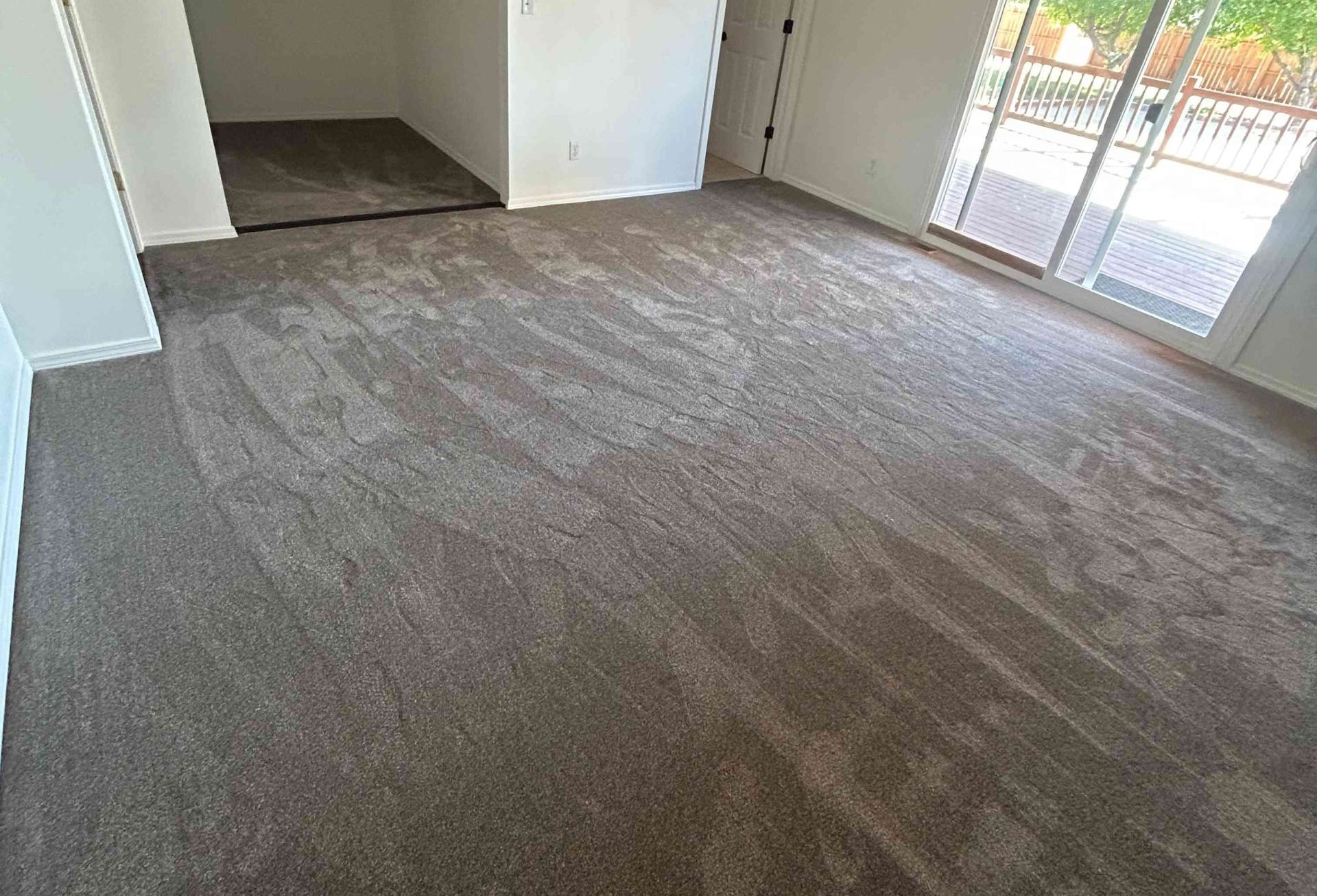
Pile crush — the compression of carpet fibers in high-traffic zones that creates a flat, thin visual appearance — is not addressable through patching. A patch replaces a specific damaged section, but the surrounding carpet’s compressed pile remains unchanged. If a room has significant pile crush across its main walkways, patching one area does not improve the overall appearance of the floor.
Widespread surface wear signals that the carpet as a whole has reached the end of life in those zones. Patch repair works on localized damage surrounded by good carpet — it does not substitute for general carpet renewal.
Backing Failure or Delamination
Carpet backing that has delaminated — where the primary and secondary backing layers have separated — cannot be repaired effectively through patching. Delamination typically results from prolonged moisture exposure, cleaning chemicals that affected the adhesive bond, or age-related deterioration. When the backing separates, the carpet loses its structural integrity and will not hold seams or tack strip tension.
If delamination is present across significant portions of the floor, replacement is the only practical solution. Patching a delaminated carpet produces a repair that will not hold over time.
Odor Contamination That Has Penetrated the Underlay
Pet urine contamination that has soaked through the carpet pile into the underlay — and in serious cases into the subfloor — cannot be resolved through patching alone. Removing a visibly damaged patch section does not address contamination in the surrounding carpet or the underlay beneath it. If the odor source is in the underlay, it will remain regardless of what is done at the carpet surface.
Replacement in these cases requires removing both the carpet and the underlay and treating the subfloor before new material is installed. This is a full replacement project regardless of whether the carpet surface shows obvious damage.
The Material Cannot Be Matched
A patch that does not match the surrounding carpet can create a result more visually prominent than the original damage. A clearly visible insert of a different color or texture draws attention rather than resolving the problem. If a close material match cannot be confirmed before work begins, patching may not be the right path.
An experienced technician will confirm whether a match is achievable before committing to the repair. When a match is not possible and the damage is conspicuous, the honest recommendation is replacement rather than a patch that makes the problem worse.
Decision Framework: Patching vs Replacement by Scenario
| Scenario | Recommended Approach | Key Reason |
| Single area pet damage, carpet under 8 years | Patch repair | Cost-effective; carpet has remaining service life |
| Burn mark, 2–3 sq ft, contained area | Patch repair | Isolated damage; good match likely achievable |
| Seam separation at one doorway | Seam repair (not patching) | Seam repair is the correct technique for this issue |
| Multiple damage areas across one room | Replacement | Multiple patches rarely look better than new carpet |
| Carpet over 15 years with widespread wear | Replacement | No meaningful remaining life to extend |
| Urine contamination through to underlay | Full replacement | Odor source cannot be removed by surface patching |
| Pre-sale, otherwise good carpet condition | Patch repair | Removes visual defect at fraction of replacement cost |
| Rental turnaround — isolated pet damage | Patch repair | Faster, cheaper; unit remains rent-ready on schedule |
| Backing delamination across the room | Replacement | Backing failure means patches will not hold |
| Close material match not achievable | Replacement or defer | Visible mismatch may look worse than original damage |
How Carpet Type Affects the Patching Decision
Not all carpet types patch equally well. Here is how material type influences the recommendation:
- Cut-pile and plush carpets: The most forgiving for patch repairs. Pile direction conceals seam lines effectively. Most residential carpet falls into this category.
- Berber and looped-pile carpets: Require careful handling at cut edges to prevent loops from unraveling along the seam line. Achievable with the right technique, but more demanding.
- Frieze (twisted pile) carpets: The irregular pile direction actually helps conceal seam lines, making patching quite effective when the material match is good.
- Wool carpets: Generally worth patching given their higher replacement cost. Professional wool carpet repair is specialized but produces excellent results with matching material.
- Commercial carpet tiles: Typically replaced tile by tile rather than patched, since the modular system is designed for section replacement without seam work.
The Carpet and Rug Institute provides consumer guidance on carpet fiber types, pile structures, and care standards that can help inform purchasing and repair decisions — useful background when evaluating whether a specific carpet type suits patch repair.
What a Professional Inspection Confirms Before Any Decision
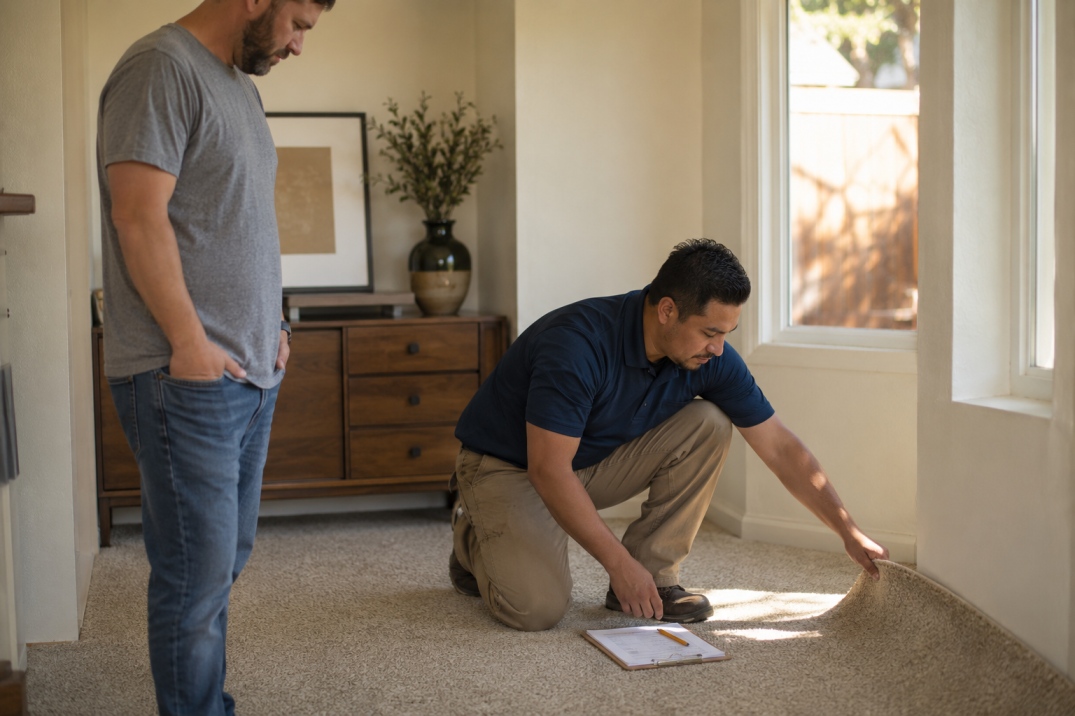
The most reliable way to determine whether patching or replacement is the right move is a professional on-site assessment. What a photograph or a self-inspection cannot capture includes:
- Backing condition beneath the damaged area and in surrounding zones
- Whether odor or moisture contamination is present below the visible surface
- The degree of pile variation between the damaged area and the rest of the room
- Whether a close material match is achievable and from what source
- The realistic expected lifespan of the carpet after a successful repair
Our team provides honest, no-obligation assessments across Northern Nevada. We are repair-first in our recommendations — but when replacement is clearly the better value, we say so directly. You can reach us through our contact page or call (775) 541-3167 to arrange a visit. We serve Reno, Sparks, Carson City, Fernley, Incline Village, and surrounding communities.
Key Takeaways
- Carpet patch repair is the right choice when damage is isolated, the carpet has clear remaining service life, and a close material match is achievable.
- Full replacement makes sense when damage is widespread, the carpet is near end of life, backing has failed, or odor contamination has penetrated the underlay.
- Cost difference is significant — typically $175–$400 for a patch versus $1,800–$3,500+ for a bedroom-sized replacement.
- Pre-sale and rental turnaround situations typically favor patch repair when the surrounding carpet is otherwise presentable.
- Material match quality determines the visual outcome of any patch repair — always confirm match feasibility before committing.
- A professional on-site assessment removes the guesswork and gives you a clear recommendation based on actual carpet condition rather than photos or estimates.
Not Sure Whether to Patch or Replace?
Get a straight answer from a professional who has seen the carpet in person. We assess carpet condition honestly and recommend the option that makes the most sense for your property, your budget, and your timeline — no upselling, no unnecessary work.
→ Call (775) 541-3167 — Get Expert Recommendation Today