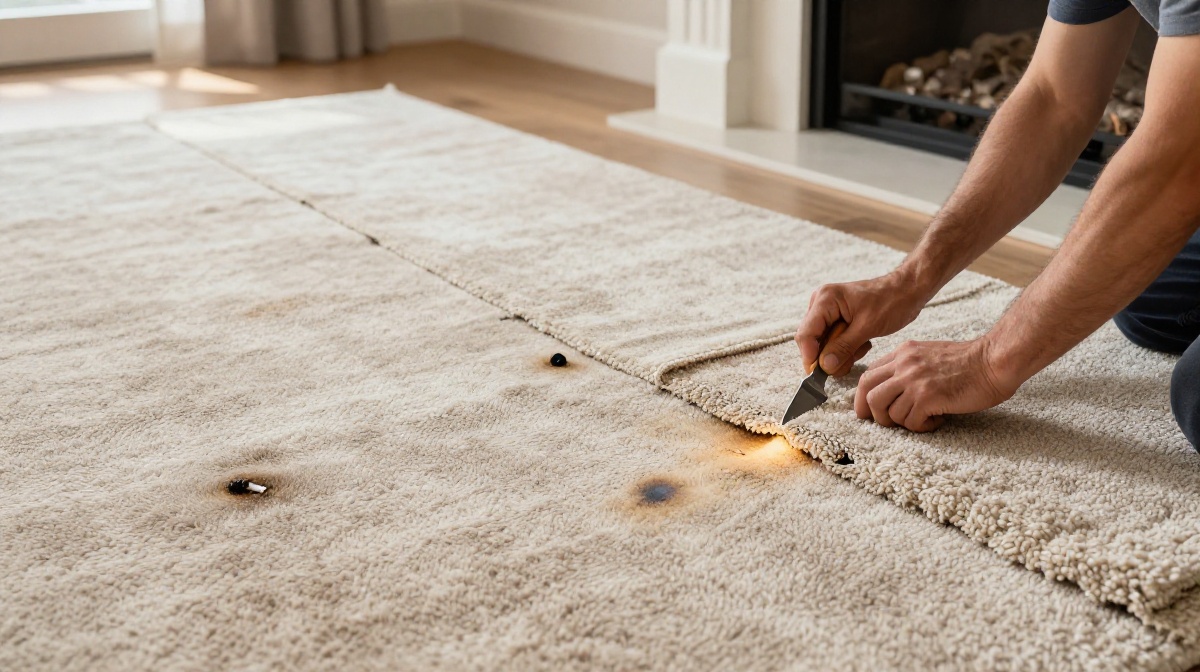
A burn mark on carpet tends to feel more catastrophic than it actually is. The char, the discoloration, the singed fibers curling at the edges, it looks like damage that demands a full floor replacement. In most situations, it does not.
Burn mark carpet repair is one of the more predictable repair categories professionals work with. The damage is concentrated, the source is clear, and the solution is well-established. Whether the burn came from a dropped cigarette, a misplaced iron, a fireplace ember, or a candle knocked sideways, there is a reasonable chance the area can be patched cleanly enough that you will not be reminded of it every time you walk past.
That said, not every burn is equally straightforward. This article explains what makes a burn repairable, what the repair process involves, when replacement becomes the more practical answer, and what realistic expectations look like for different types of burn damage.
Why Burns Are Different From Other Carpet Damage
Most carpet damage — stains, pet scratches, rippling — leaves the fiber structure largely intact. Burn damage is chemically different. Heat does not just discolor carpet; it changes the fiber at a molecular level. Synthetic fibers melt, fuse, and contract. Natural fibers char and become brittle. Once burned carpet fibers are heat-altered, no cleaning process reverses that. The damaged material has to come out.
That reality is actually what makes burn repair manageable. Because the damage is localized and the goal is removal rather than restoration, a skilled technician can cut out the affected section entirely and replace it with properly matched donor carpet. The burned fibers are gone. The replacement material is structurally sound. The question becomes how well the repair blends, not whether the damage can be removed.
Types of Burn Damage and What They Mean for Repair
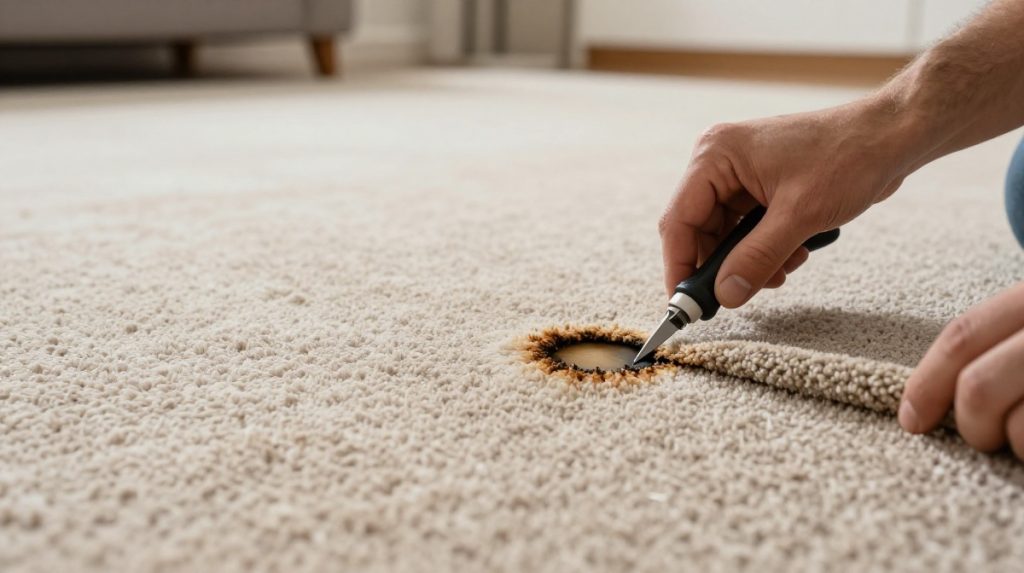
Cigarette burns are the most common type and typically the easiest to repair. A dropped cigarette usually creates a small, roughly circular burn of one to two inches in diameter. The char is concentrated, the surrounding fibers are often unaffected, and a small plug of donor carpet can fill the void cleanly. On low-pile carpet, a well-executed cigarette burn repair is very difficult to detect from standing height.
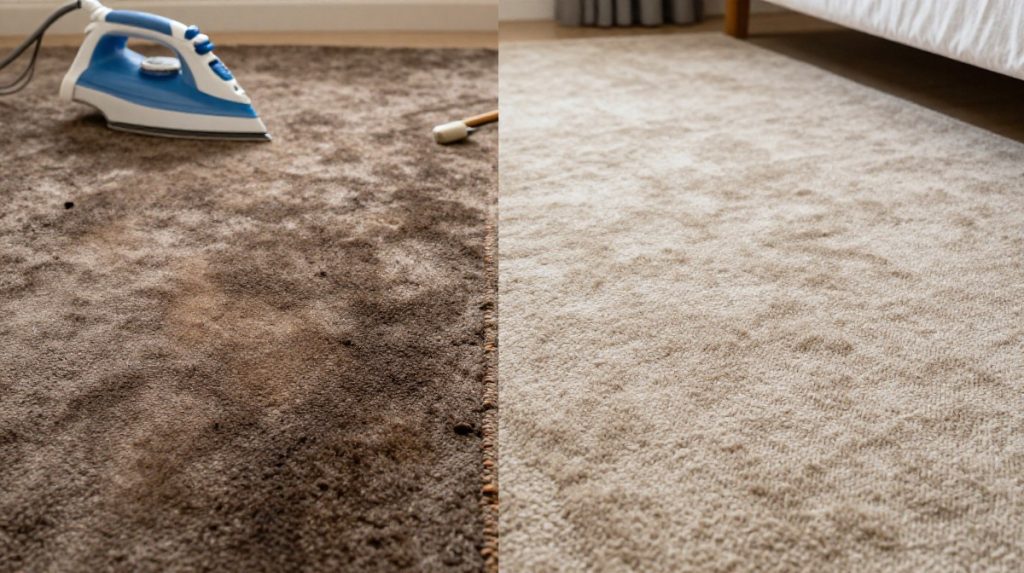
Iron burns are more variable. A briefly contacted iron on medium heat may singe the surface fibers without fully melting the backing. A longer contact or a very hot setting can melt the pile flat, fuse it to the backing, and in some cases leave a depression that affects the surrounding carpet structure. Smaller iron burns respond well to patching. Larger iron contact areas, particularly if the depression extends several inches or the backing is affected, require more careful seam work.
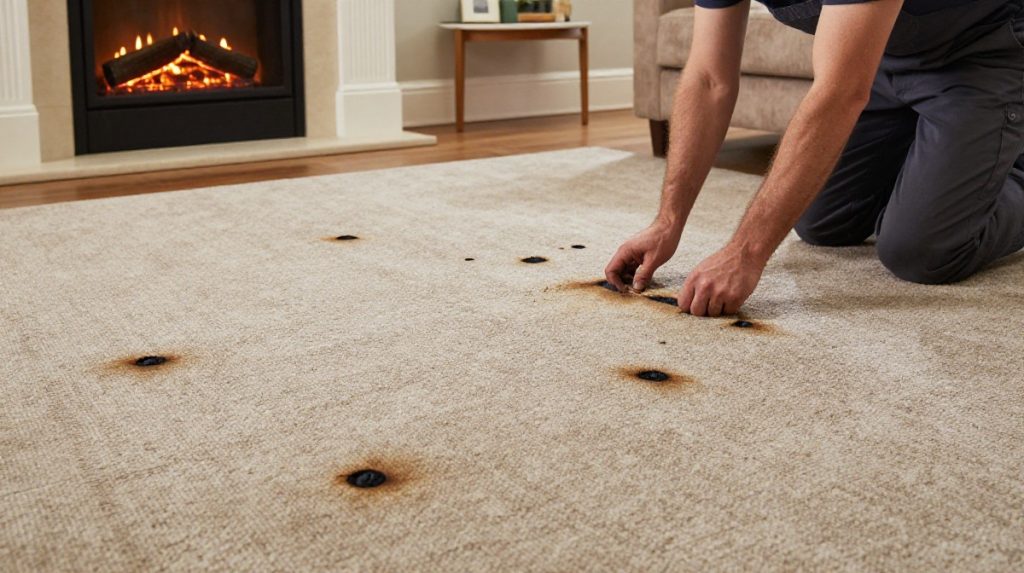
Fireplace and ember damage tends to scatter across a small zone rather than concentrating in a single point. Multiple small burns across a two- to three-square-foot area are more complex to repair than a single burn of the same total size, because each individual spot requires its own attention, and the repairs must blend cohesively with each other and with the surrounding carpet.
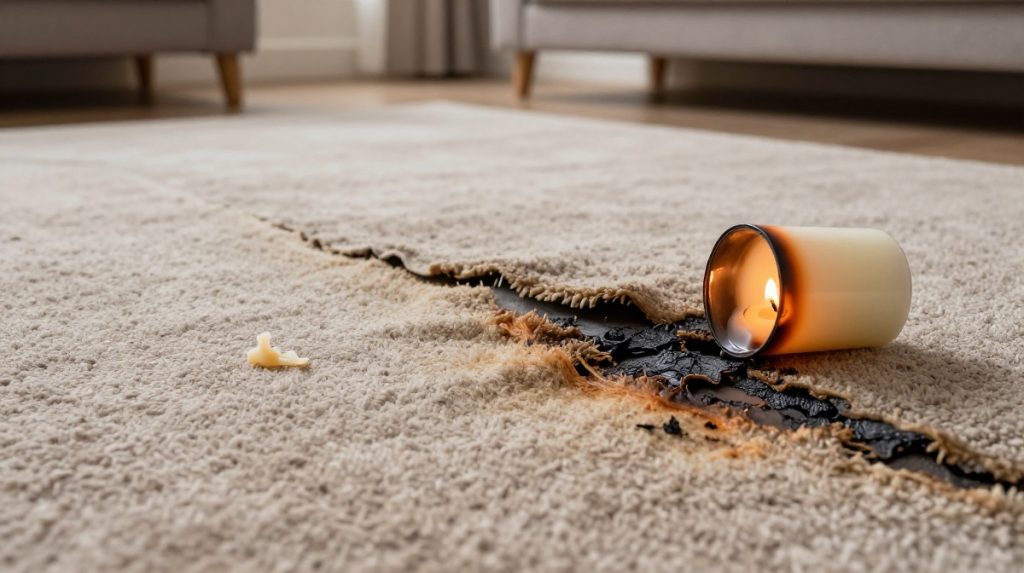
Candle and heat appliance burns vary widely. A small wax drip from a knocked-over candle typically leaves a manageable stain-burn combination. A tipped candle that burned for several minutes before being noticed can leave a large char area with melted and fused fibers across several inches.
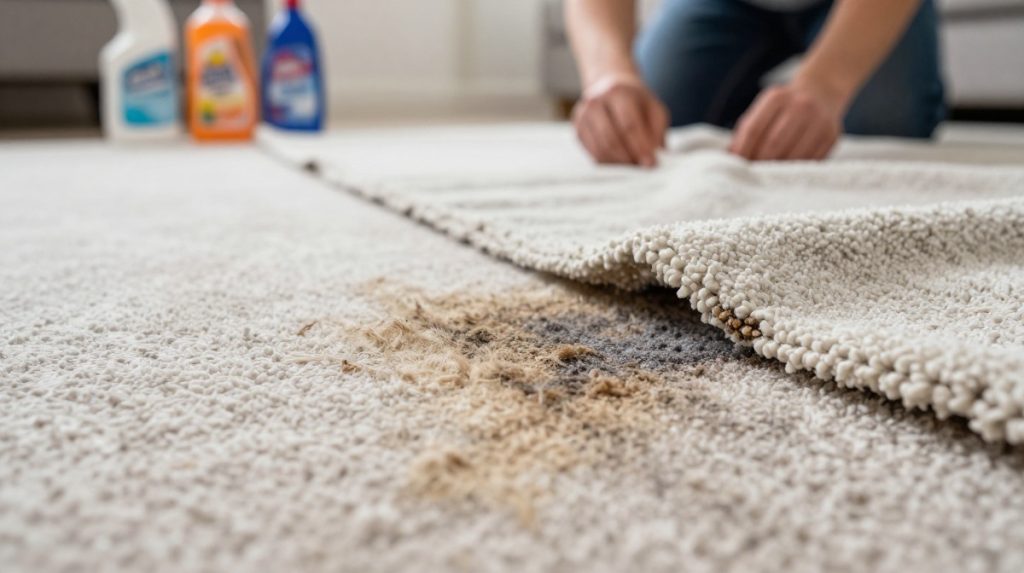
Chemical burn damage, which occurs from bleach spills, strong cleaning agents, or certain floor care products, presents differently from heat burns but follows similar repair logic. The fibers are permanently altered, removal and patching is the approach, and the result depends heavily on how well the donor carpet matches.
How Professional Burn Carpet Repair Works
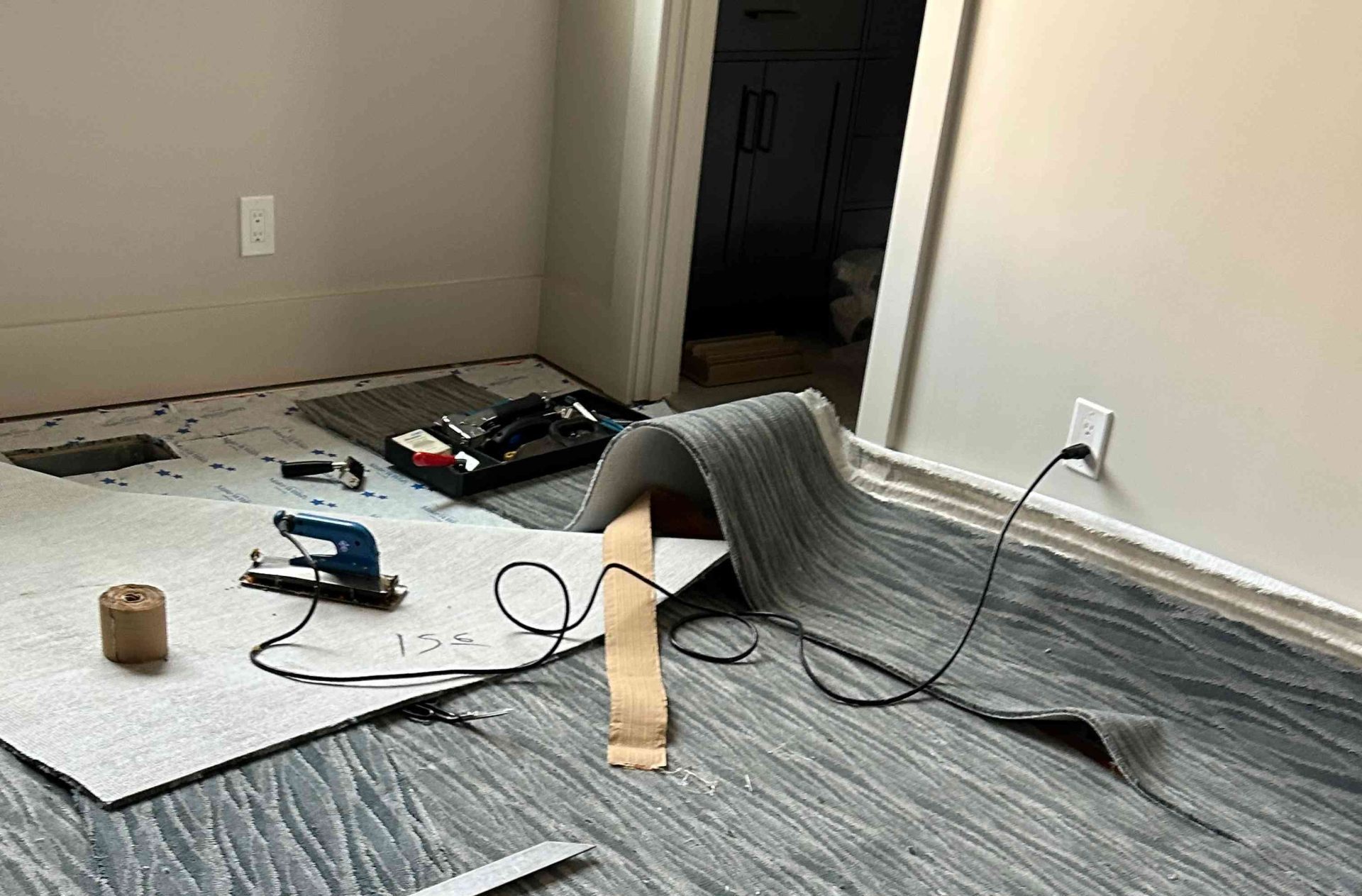
The foundation of burned carpet repair is patching. The burned section is removed, a matching donor piece is installed, and the seam is integrated into the surrounding carpet.
In practice, the process involves more precision than that description suggests.
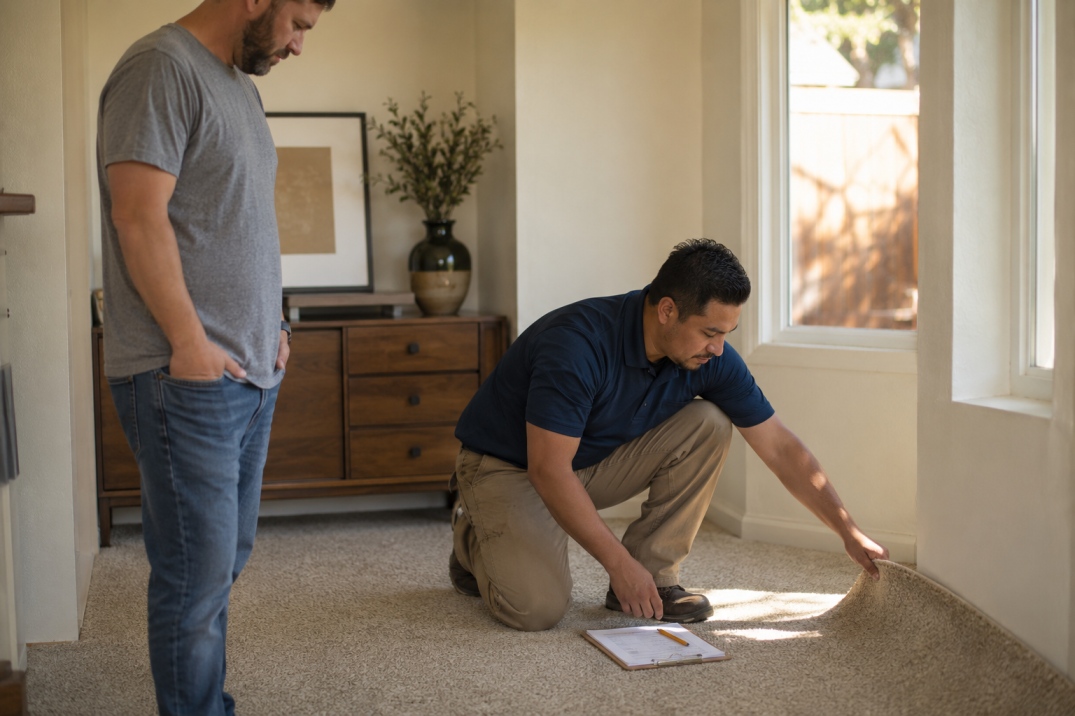
The technician first assesses the burn size and depth, checking whether the primary backing and padding have been affected. A surface-only burn that has not penetrated the backing is cleaner to work with than one that has melted through to the padding below.
The damaged area is then cut out with clean, precise edges. The cut shape matters: sharp, geometric cuts create seams that are easier to integrate than irregular or curved ones. The size of the cut is determined by the extent of the damaged fiber area, not the visible surface char, because char residue can sometimes extend slightly beyond the visibly burned zone.
Donor carpet is sourced and trimmed to match the cutout precisely. Carpet patching services use remnants from the original installation when available — saved remnants are valuable for exactly this reason. When original material is unavailable, the technician selects the closest available match based on pile height, fiber type, and color, and positions the patch with pile direction aligned to the surrounding carpet.
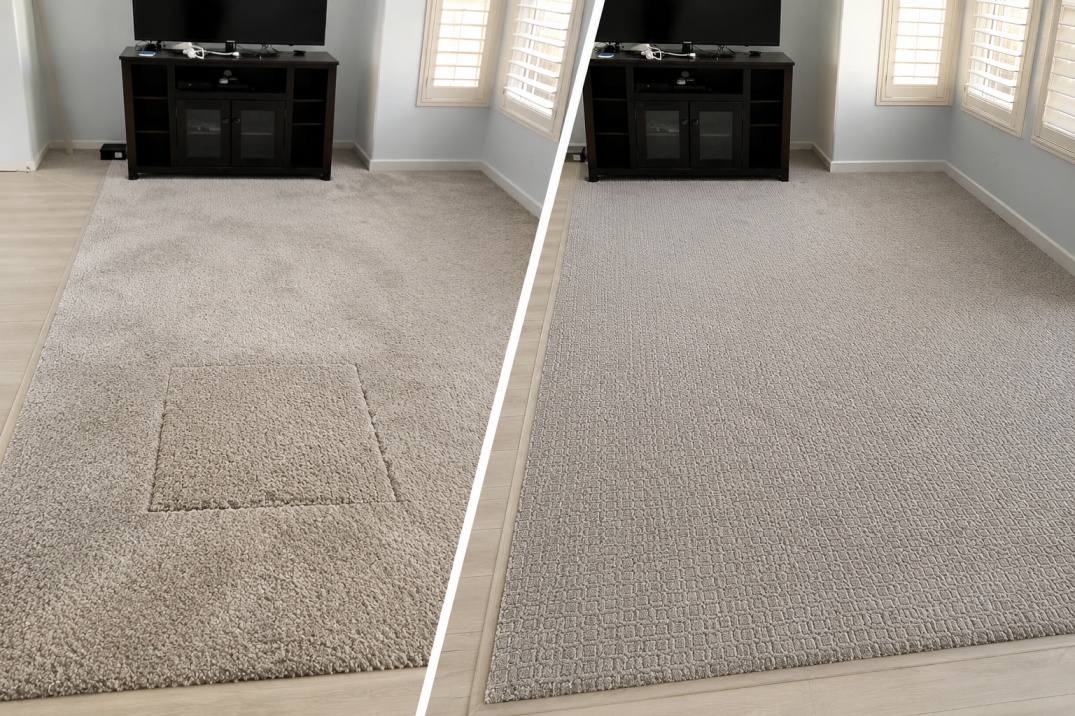
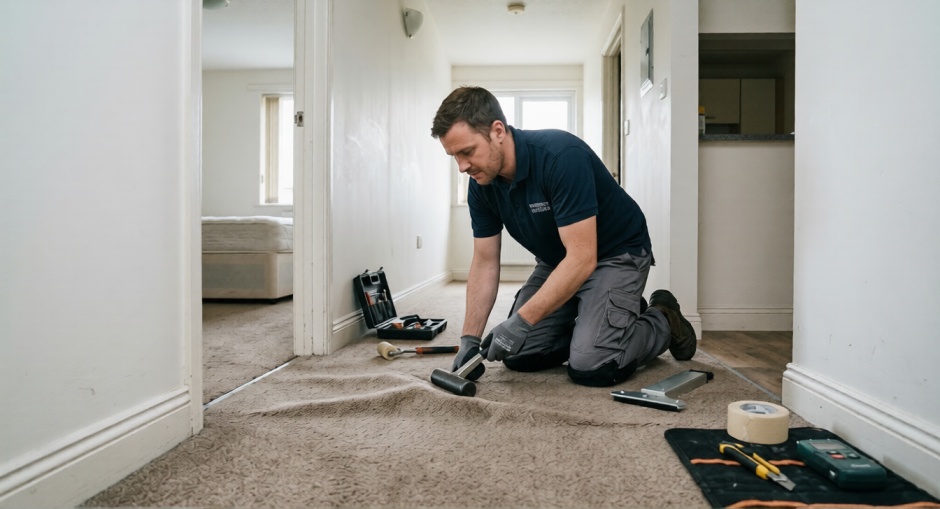
The patch is secured using hot-melt seaming tape applied beneath the seam edges. Seam sealer is applied at the seam line to lock the edges and prevent future separation. On well-matched material, the carpet seam repair work is essentially invisible from standing height once the carpet has been lightly worked with a brush or grooming tool to blend the pile transition.
The entire process for a single cigarette burn repair takes roughly thirty to sixty minutes in most cases. Larger burns or multi-spot ember damage take longer, but the fundamental approach remains the same.
Donor Carpet and Why Matching Material Matters
The quality of a burn repair depends significantly on how well the donor carpet matches the existing floor. This is a point worth understanding before you decide whether to attempt a repair at all.
When original carpet remnants from the installation are available, matching is straightforward. The material is identical in fiber type, construction, color, and age. The result is as close to invisible as this type of repair gets.
When no remnant is available, the technician works with what can be sourced. On common, widely available carpet styles, a very close match is often achievable. On custom, discontinued, or older carpet styles, finding a sufficiently close match takes more effort, and the result may be visually acceptable rather than seamless.
One practical source of donor material that is often overlooked: inside closets, particularly along edges and in corners, carpet is rarely walked on and ages at a slower rate than open room areas. Cutting a patch from an inside closet corner and replacing that corner with a closely matched remnant is a technique that gives the main room a better visual repair outcome.
How Carpet Fiber Type Affects Burn Repair
Different carpet fibers respond to heat differently, which affects both the nature of the burn damage and the ease of repair.
Nylon is heat-sensitive and will melt under direct flame or prolonged heat contact. However, it is the most resilient and repairable fiber for patching purposes. The carpet fiber burn characteristics described by the Carpet and Rug Institute confirm that nylon’s overall structural strength makes it the most forgiving fiber for repair work.
Polyester melts at lower temperatures than nylon and can fuse aggressively to the backing when burned. This creates a harder, more bonded damage zone that requires more careful cutting to remove cleanly.
Olefin (polypropylene) has a low melting point and scorches easily. It tends to leave a flat, hardened burn zone. The upside is that olefin’s odor from burning is minimal compared to other synthetics.
Wool chars rather than melts, which actually makes the damage zone easier to cut away cleanly. Wool’s natural resilience also means the surrounding fibers recover better after repair. The limitation is that wool carpet can be expensive and harder to source for donor material.
Berber presents a particular challenge for burn repair because the looped construction means even a small burn can expose loop ends that begin to unravel if not addressed carefully during the cut-and-patch process.
When Replacement Makes More Sense Than Repair
Burn repair is not always the right answer, and a trustworthy technician will tell you when it is not.
Large burn areas spanning several square feet, particularly if the backing and padding are compromised, can require extensive patching that approaches or exceeds the cost value of the carpet’s remaining useful life. If the carpet is already near the end of its typical lifespan, putting professional repair investment into it may not be the best financial decision.
Multiple scattered burn points across a single room from a significant fire or ember event may collectively require so much patching that the floor ends up looking inconsistent, particularly if matching donor material is not readily available.
When the carpet underneath the burn area is already significantly worn, brittle, or discolored differently than the rest of the room, a patch, however well executed, will read as a different-looking section simply because the surrounding carpet is in poor condition.
A consultation with trained carpet repair technicians gives you an honest assessment of whether repair makes practical and financial sense for your specific situation.
What Realistic Burn Repair Results Look Like
A well-executed cigarette burn repair on low-pile nylon or polyester carpet, with good donor material, produces a result that is genuinely difficult to notice in normal room lighting from standing height. A careful look at seam lines may reveal the repair to someone who knows where to look, but it does not present as an obvious patch to casual observation.
Larger repairs, multi-spot repairs, or repairs on patterned or high-pile carpet may produce results that are structurally excellent but more visually detectable under direct lighting. That is an honest assessment of what the process can and cannot achieve.
The goal of professional burn mark carpet repair is not a claim of perfect invisibility — it is a structurally sound, visually clean outcome that restores the appearance of your floor without the cost and disruption of full replacement.
Request a burn repair estimate to get a realistic picture of what the repair can accomplish in your specific situation.
FAQ: Burn Mark Carpet Repair
Can a cigarette burn in carpet be repaired without it showing?
On low-pile carpet with matching donor material, small cigarette burns are among the most effectively repaired carpet damage types. A well-executed plug patch is typically not visible at standing height.
Does the entire carpet need to be replaced because of one burn mark?
Rarely. Single burn marks and even small clusters of burns are candidates for professional patching. Full replacement is typically only warranted when burn damage covers a very large area or the carpet’s overall condition makes repair investment impractical.
Where does the donor carpet come from for burn repairs?
Ideally, from remnants saved during the original installation. When those are unavailable, closet-edge cuts are a common source. Technicians may also source closely matched commercial carpet material when neither option is available.
How long does a burn carpet repair take?
A single cigarette-sized burn repair typically takes thirty to sixty minutes. Larger or multi-spot repairs take longer but are generally completed within a single visit.
Is carpet burn repair worth it compared to full replacement?
For localized burn damage on carpet with remaining useful life, repair is almost always the more cost-effective option. The cost of professional burn patching is a fraction of full floor replacement, and the results are typically clean enough that the repair does not affect the room’s appearance noticeably.
Can iron burn marks be repaired on all carpet types?
Most carpet fiber types can be patched after iron burn damage. The variables that affect the outcome are the size of the burn, whether the backing was compromised, and how well donor material can be matched to the existing carpet.