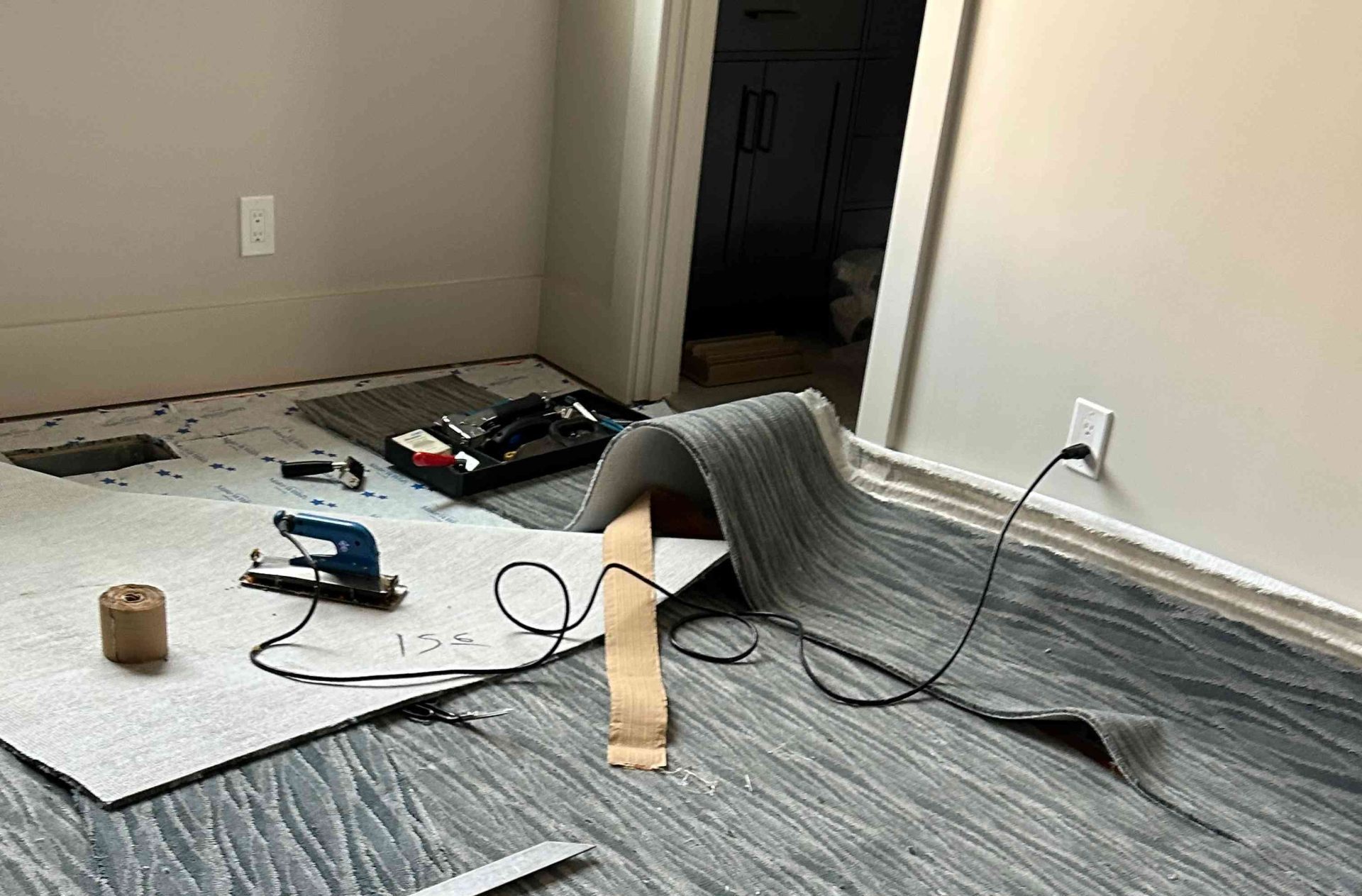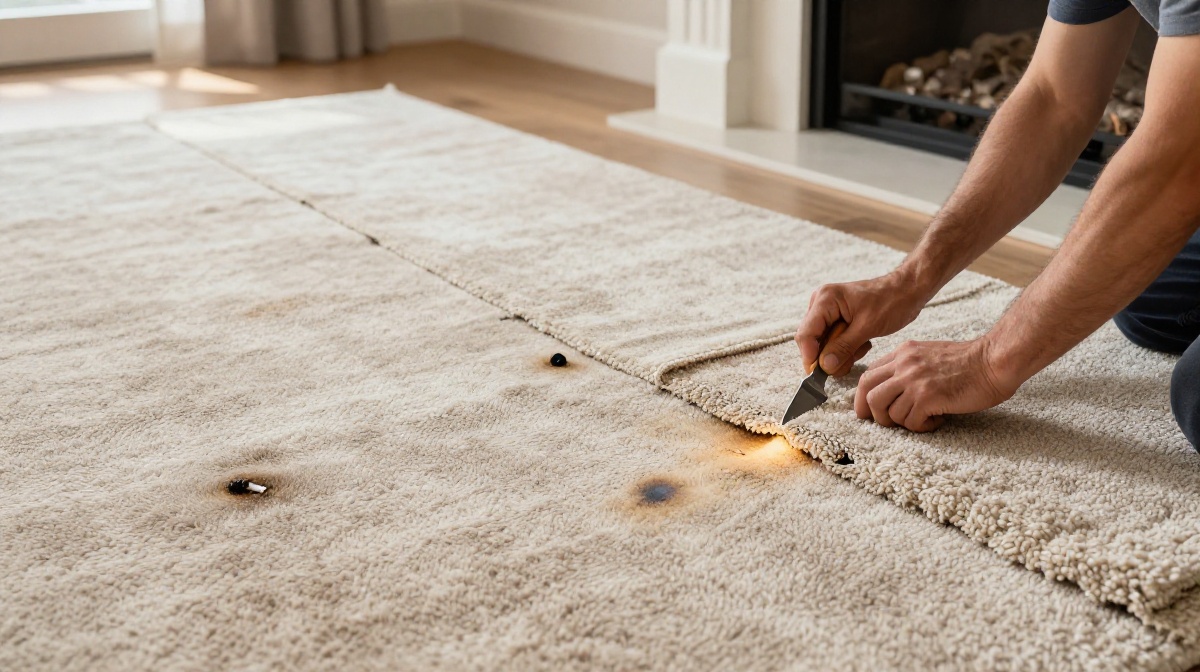
Carpet ripples rarely appear overnight. The process behind them involves a gradual breakdown of the tension that holds carpet flush against the subfloor, and understanding that mechanism is the difference between choosing a repair that lasts and one that fails within a year.
The Mechanics Behind Carpet Installation
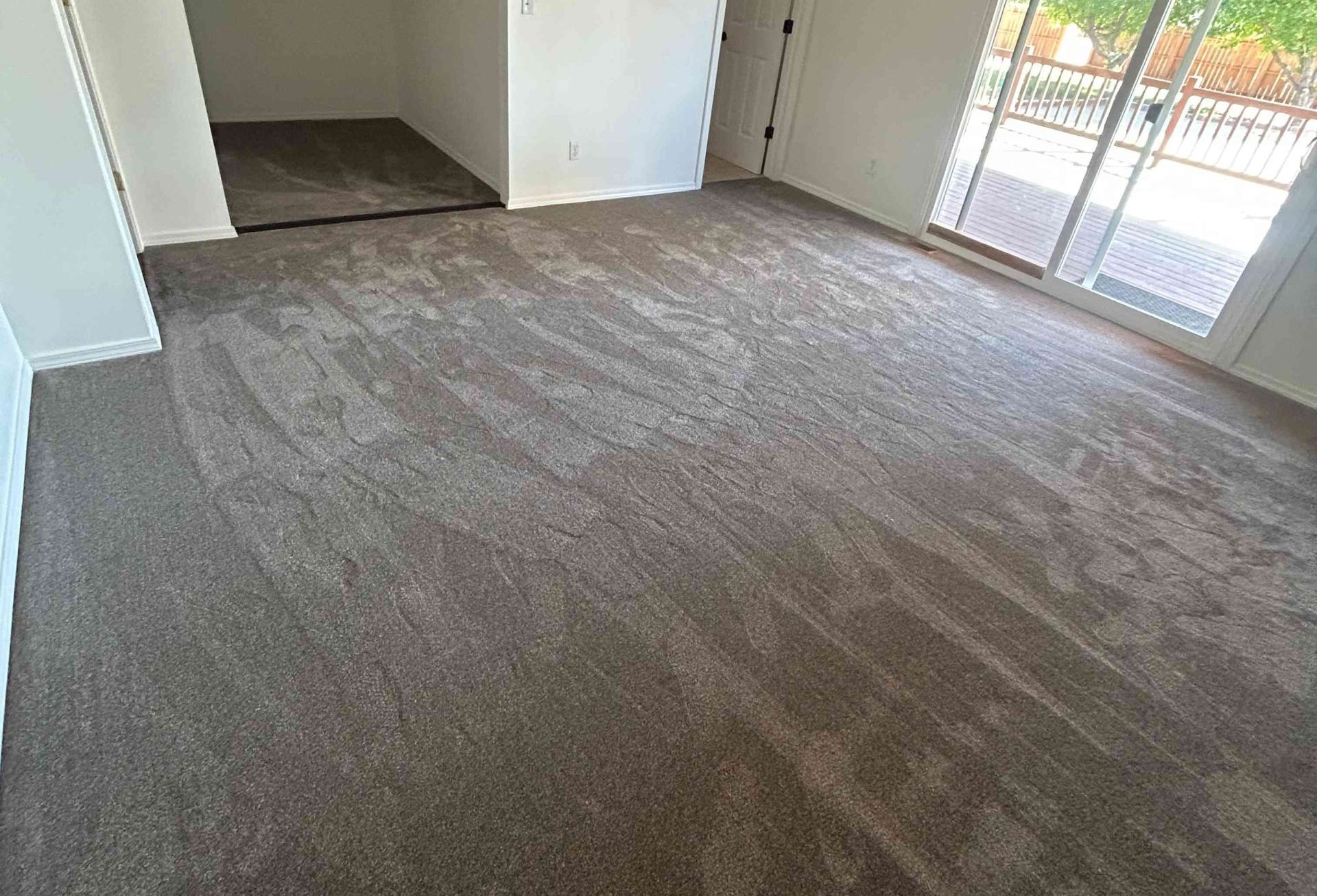
Carpet is installed under tension. During a proper installation, the material is stretched tightly across tack strips secured around a room’s perimeter. Those strips grip the carpet backing and hold it flat under controlled force. When that tension holds, the surface lies smooth. When it deteriorates for any reason, the material shifts, buckles, and eventually forms visible ripples or waves across the floor.
This tension-based system has specific vulnerabilities. Humidity fluctuations, improper original installation, heavy use patterns, and padding degradation are the most consistent causes of tension failure over time. Northern Nevada’s high-desert climate, with its seasonal humidity swings between dry summers and wetter winters, creates conditions that accelerate these vulnerabilities in homes without consistent indoor climate control.
What Causes Carpet Wrinkles
Moisture and Humidity Changes
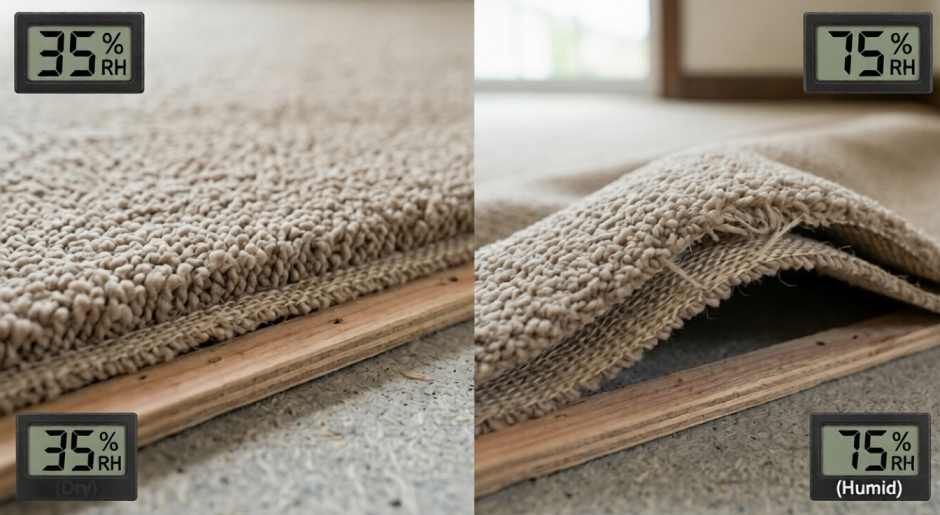
Moisture and humidity fluctuations are the primary drivers of residential carpet buckling. Carpet fibers absorb ambient moisture, causing structural shifts. According to EPA guidance on indoor moisture control, maintaining relative humidity between 30% and 50% is essential to protect indoor materials.
When humidity rises, the backing expands; when it drops, the material contracts. These cycles loosen the carpet’s grip on tack strips, causing it to lift and buckle. Rooms with limited ventilation or basements are especially susceptible to these fluctuations. Addressing these environmental factors is crucial for ensuring a professional carpet stretching repair holds long-term.
Poor Installation Practices
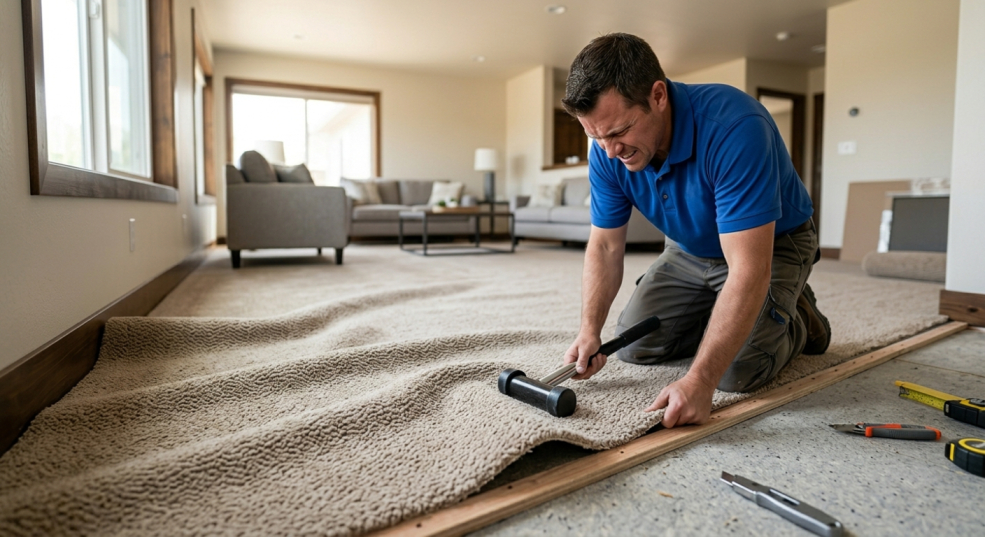
Poor installation practice is the second major cause and arguably the most preventable. Industry standards from the Carpet and Rug Institute specify that a power stretcher should be used in all standard room installations. Many installers use only a knee kicker instead, which does not produce sufficient tension across rooms wider than approximately 10 to 12 feet. Carpet laid with only a knee kicker may lie flat initially, but tension failure typically appears within one to three years as foot traffic and environmental conditions work against the inadequate stretch.
Furniture Movement and Traffic Stress
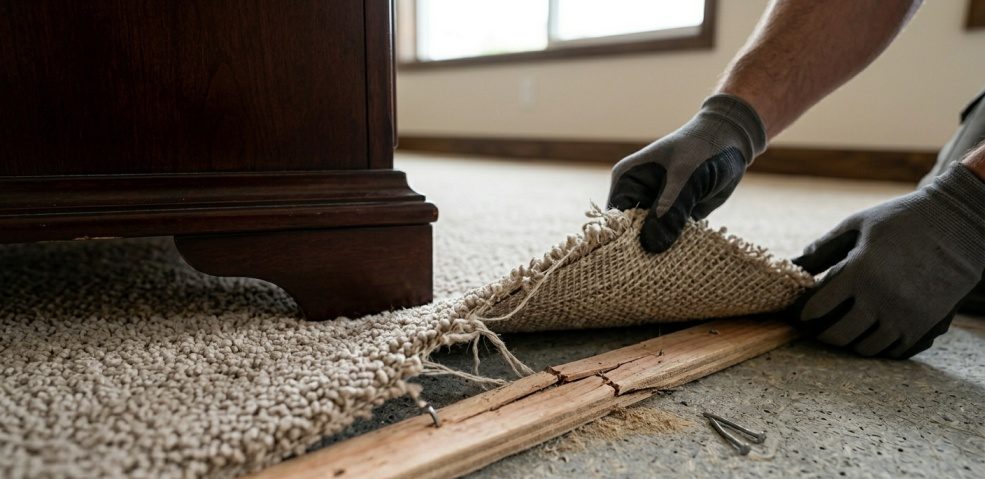
Heavy furniture movement contributes more than most homeowners recognize. Dragging furniture across carpeted rooms displaces the material incrementally, and those small shifts accumulate over time. Sections pulled gradually away from tack strips create loose zones that buckle with regular foot traffic.
Padding Breakdown Beneath the Carpet
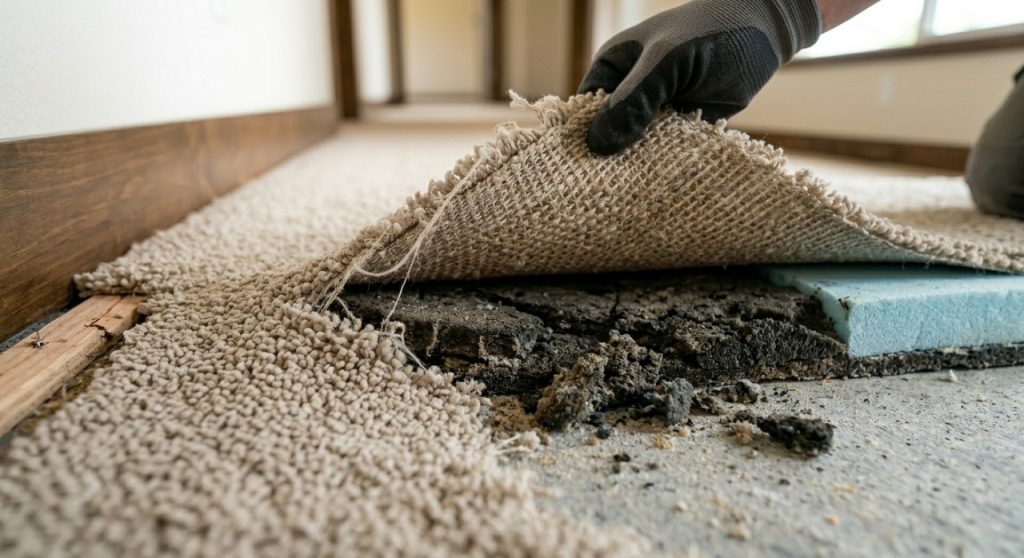
Padding breakdown accelerates the entire process. Once padding compresses heavily and loses structural integrity, particularly in high-traffic corridors and living spaces, the carpet above it loses its stable base. A degraded pad allows the carpet to flex and shift with each step, which works against tack strip retention in ways that are difficult to counteract without addressing the padding alongside the carpet repair.
Delamination and Backing Separation
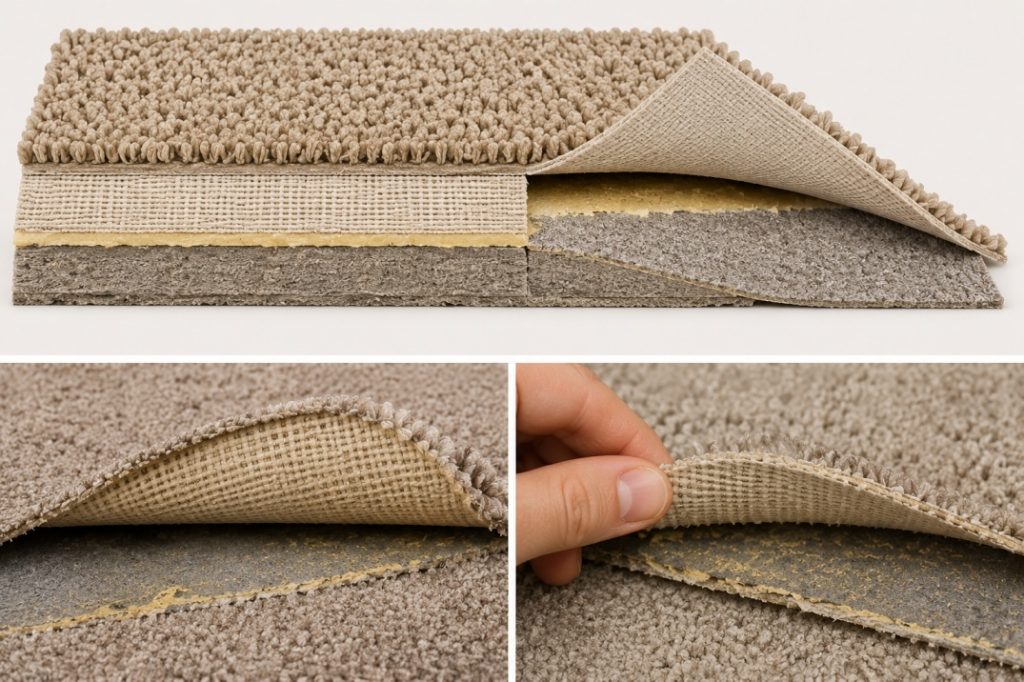
Delamination, the separation of a carpet’s primary backing from its secondary backing, causes wrinkling that resembles tension failure but responds differently to repair. This occurs when the adhesive bond between backing layers breaks down, most often from prolonged moisture exposure or material age. Identifying delamination before re-stretching avoids the frustration of a repair attempt that cannot hold.
Why Wrinkles Worsen When Left Unaddressed
Progressive Backing Damage
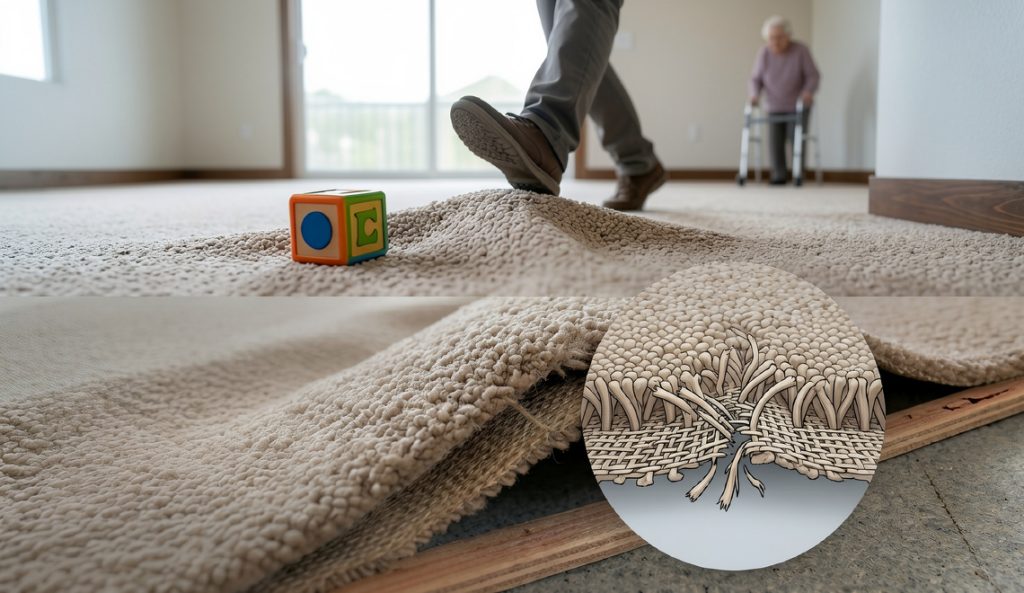
A ripple that appears minor will not remain minor. Loose carpet over tack strips creates a repeated fold point where the material bends with each step. That repeated flexing weakens the backing at the fold line, eventually causing fiber damage, visible wear patterns, and fraying at the ridge of the ripple. The tack strips themselves can shift under sustained pressure, making future repairs more complex and more expensive.
Household Safety Concerns
Trip hazards from loose and buckled carpet are a significant safety concern in residential settings, particularly for older adults and young children. Addressing carpet wrinkle repair before the problem develops into structural backing damage keeps both the repair scope and the safety risk manageable.
How Professional Carpet Stretching Corrects the Problem
Re-Stretching and Tension Restoration
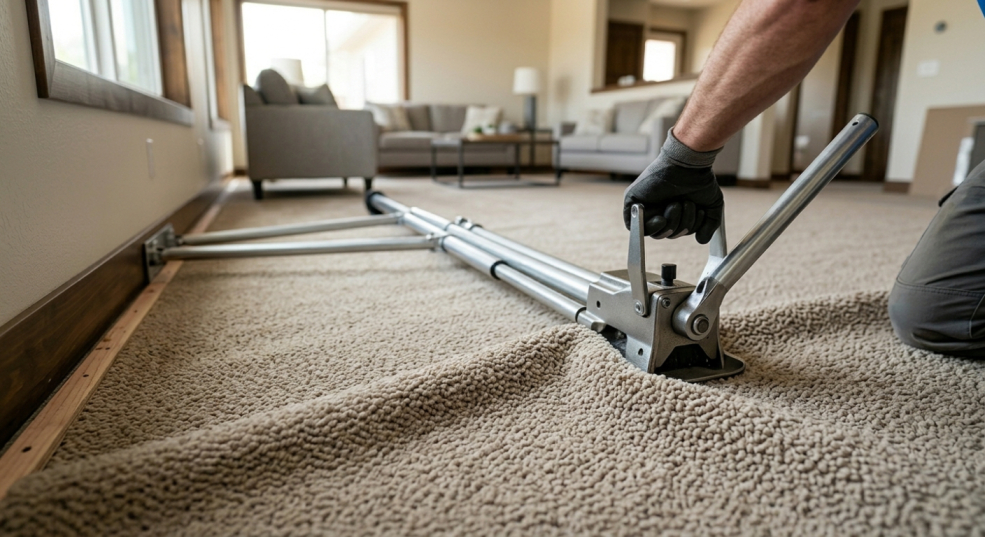
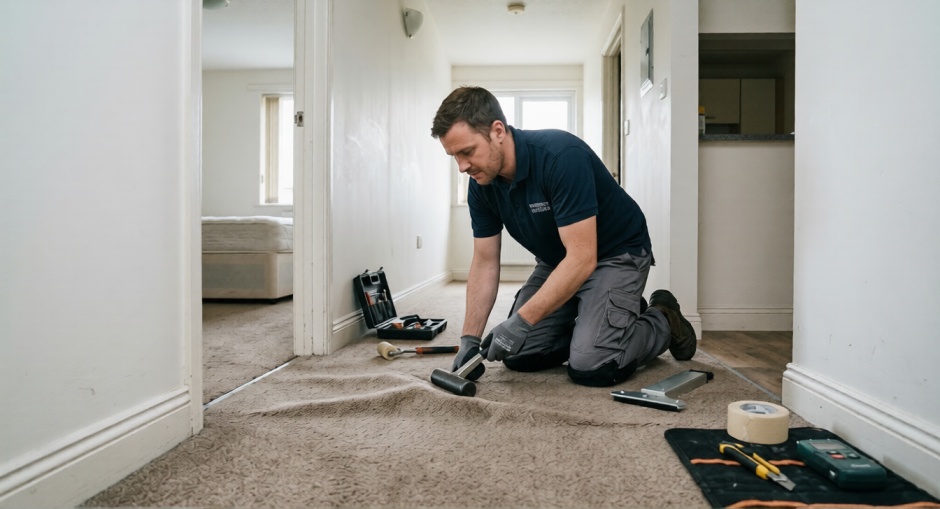
Professional carpet re-stretching involves detaching the carpet from the tack strips along one or more walls, applying controlled tension with a power stretcher extended wall to wall, and re-securing the material under proper tension. A power stretcher uses a pole and lever mechanism that allows the technician to apply measured, sustained force across the full room span.
The Professional Stretching Process
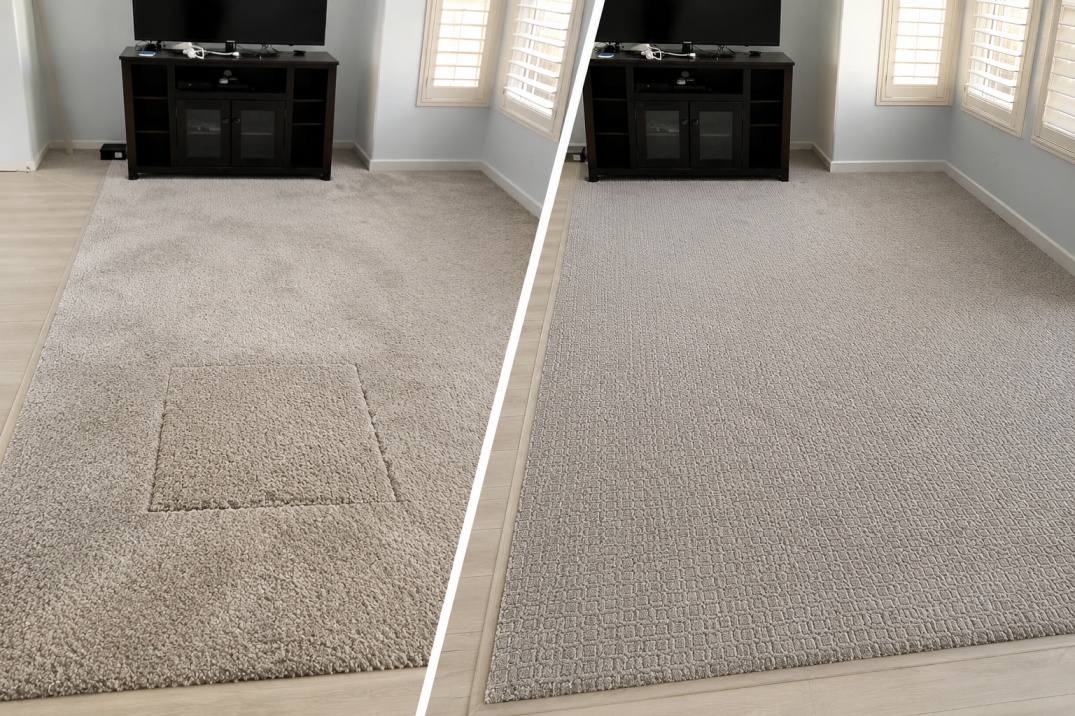
The technician works systematically, starting at one wall and pushing outward in a controlled grid pattern. Excess material created by the re-tensioning is trimmed and tucked neatly at the baseboard. Completed correctly, the result is a surface that lies completely flat with no buckles or ripples visible.
Why Professional Stretching Lasts Longer
For homeowners in the Reno and Sparks area dealing with a loose carpet fix, professional carpet restretching services performed with power stretching equipment address the actual cause of the problem rather than masking it temporarily. The work takes far less time than a full replacement and leaves the existing flooring intact and serviceable.
Power Stretching vs. Knee Kicker: Why Equipment Matters
What a Knee Kicker Can and Cannot Do
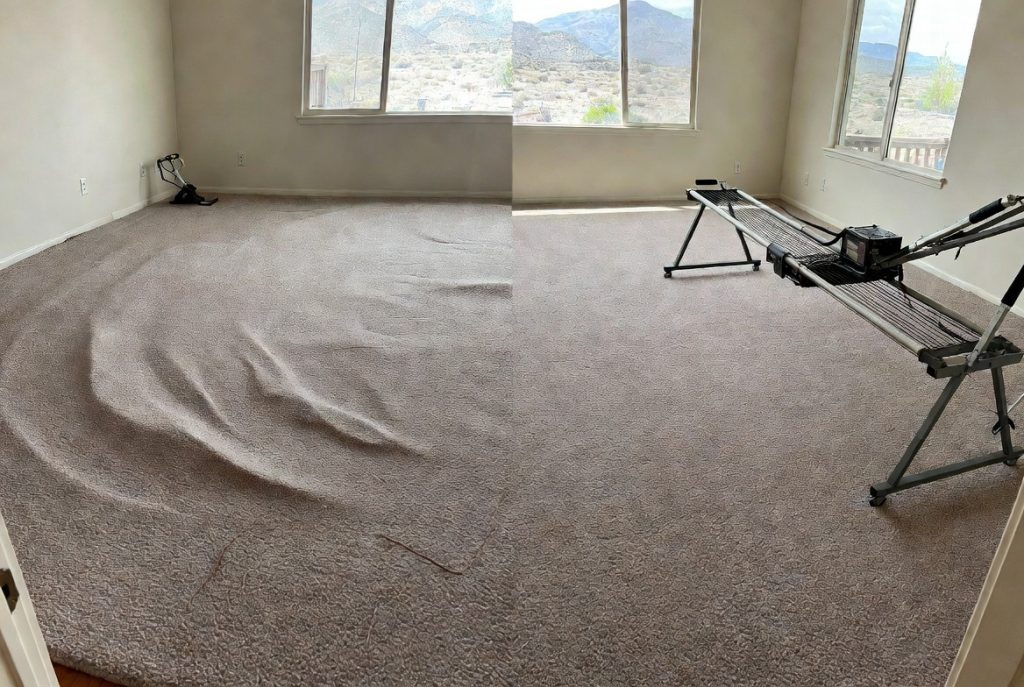
The knee kicker is a useful tool for tucking edges and making minor adjustments in tight spaces. It is not a substitute for a power stretcher in open rooms. A power stretcher applies sustained, measurable force across the full room dimension and corrects tension deficiencies that a knee kicker simply cannot reach.
Why Power Stretchers Are Industry Standard
The Carpet and Rug Institute’s installation standard designates the power stretcher as required equipment for residential carpet installation, and the same applies to professional carpet restretching. When re-stretching is performed with correct equipment, the results hold for the remaining lifespan of the carpet. When a knee kicker is used as the primary re-stretching tool, wrinkles typically return within a year or two. Confirming that power stretching equipment will be used is a straightforward and reasonable question to ask any carpet stretching service in Northern Nevada before scheduling the work.
The Northern Nevada Climate Factor
Seasonal Humidity and Carpet Movement
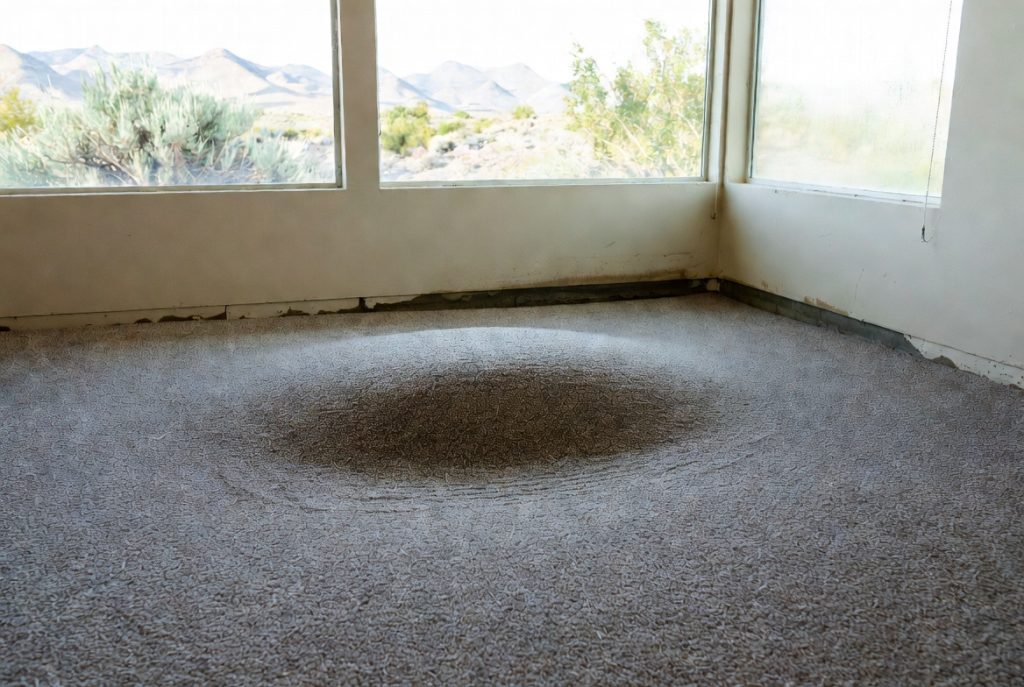
Northern Nevada’s high-desert location creates seasonal humidity variation that affects installed carpet more than in climatically stable regions. Winters bring elevated indoor humidity from precipitation and heating system moisture cycling. Summers create dry conditions that cause carpet backing to contract. This annual expansion-contraction cycle is a consistent contributor to tension loss in homes without controlled indoor humidity.
Slab Foundations and Moisture Influence
Carpet installed during the dry summer season in Reno or Sparks may not have been stretched tightly enough to accommodate winter humidity expansion. Homes with slab-on-grade construction or basement-level carpet face additional moisture influence from below that compounds this seasonal variation. Addressing both the carpet tension and any underlying moisture issue is how carpet bulge repair in Northern Nevada produces results that hold through seasonal changes rather than repeating the following year.
Evaluating Your Carpet Before Calling a Professional
Checking Carpet Backing Condition
Most homeowners can make a useful preliminary assessment before scheduling a repair consultation. Press your palm flat against the carpet in the wrinkled area and apply light pressure. Intact backing feels consistent and moderately firm. Backing that has delaminated feels spongy or moves separately under pressure. Check the pile in the affected area and compare it to a section that receives minimal foot traffic. If the difference in pile height and density is significant, the carpet may have worn beyond what re-stretching can practically restore.
Inspecting Tack Strips and Edges
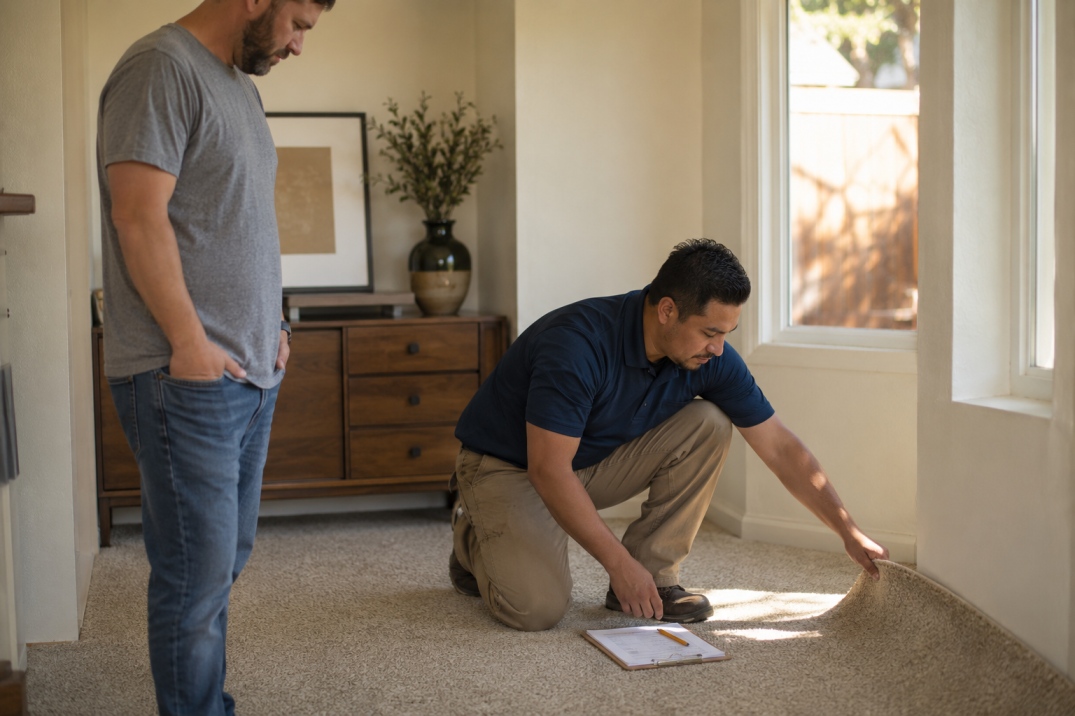
Lift the carpet edge carefully at the wall near the ripple. Tack strips with intact gripping points and backing that holds firmly to those points indicate a carpet that can be re-stretched successfully. Tack strips that pull free easily or backing that tears along the tack line suggest the tension system has failed beyond what a standard re-stretch addresses without additional work.
Why a Professional Inspection Still Matters
These visual and tactile checks are starting points, not substitutes for professional evaluation. They help homeowners arrive at a consultation with some context for what they are dealing with.
When Re-Stretching Does Not Apply
Cases Where Re-Stretching Is Ineffective
Re-stretching corrects tension failure. It does not repair delamination, backing deterioration from water damage, or carpet that has worn through the pile. Carpet showing significant pile loss in the affected area, backing that feels spongy under pressure, or sections with sustained moisture damage generally require patching or replacement rather than re-stretching.
Seam Damage and Combined Repairs
A separated seam alongside a wrinkle may need seam repair performed before or alongside the stretching work. Attempting to stretch over an open seam can worsen the separation. Most professional carpet seaming services in Reno, NV, assess seam condition as part of any re-stretching evaluation, and combining repairs in a single visit is typically more efficient and cost-effective.
Getting a Professional Assessment
For Northern Nevada homeowners with questions about their specific situation, a consultation with a carpet repair company in Reno NV provides a direct assessment based on the carpet’s actual condition, not a general rule applied from a distance.