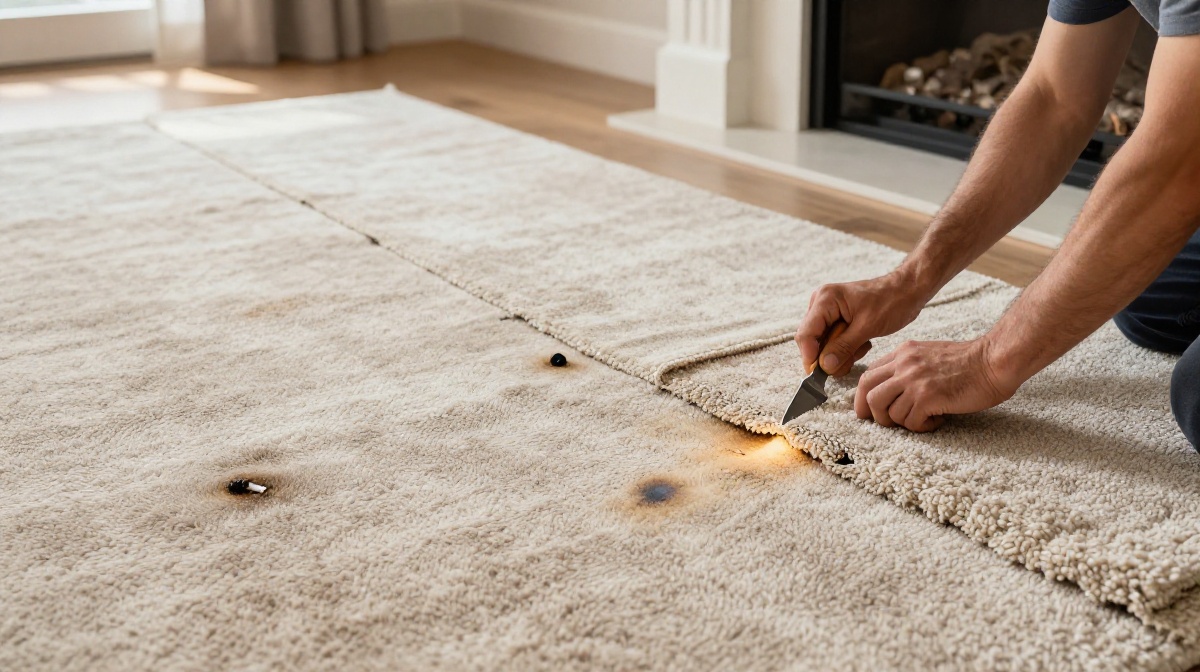
Carpet problems rarely arrive suddenly. They develop over months, a slight ripple underfoot you’ve been stepping around, a seam that catches your eye in certain light, a corner that’s been lifting longer than you care to admit. By the time most homeowners actually book a repair, the issue has been present long enough to worsen considerably.
The seven signs below are the most consistent indicators that professional carpet repair in your Northern Nevada home is overdue. Some are purely cosmetic. Others are safety concerns. A few are early warnings where acting now costs far less than waiting another six months.
1. Ripples, Waves, or Buckles Forming Underfoot
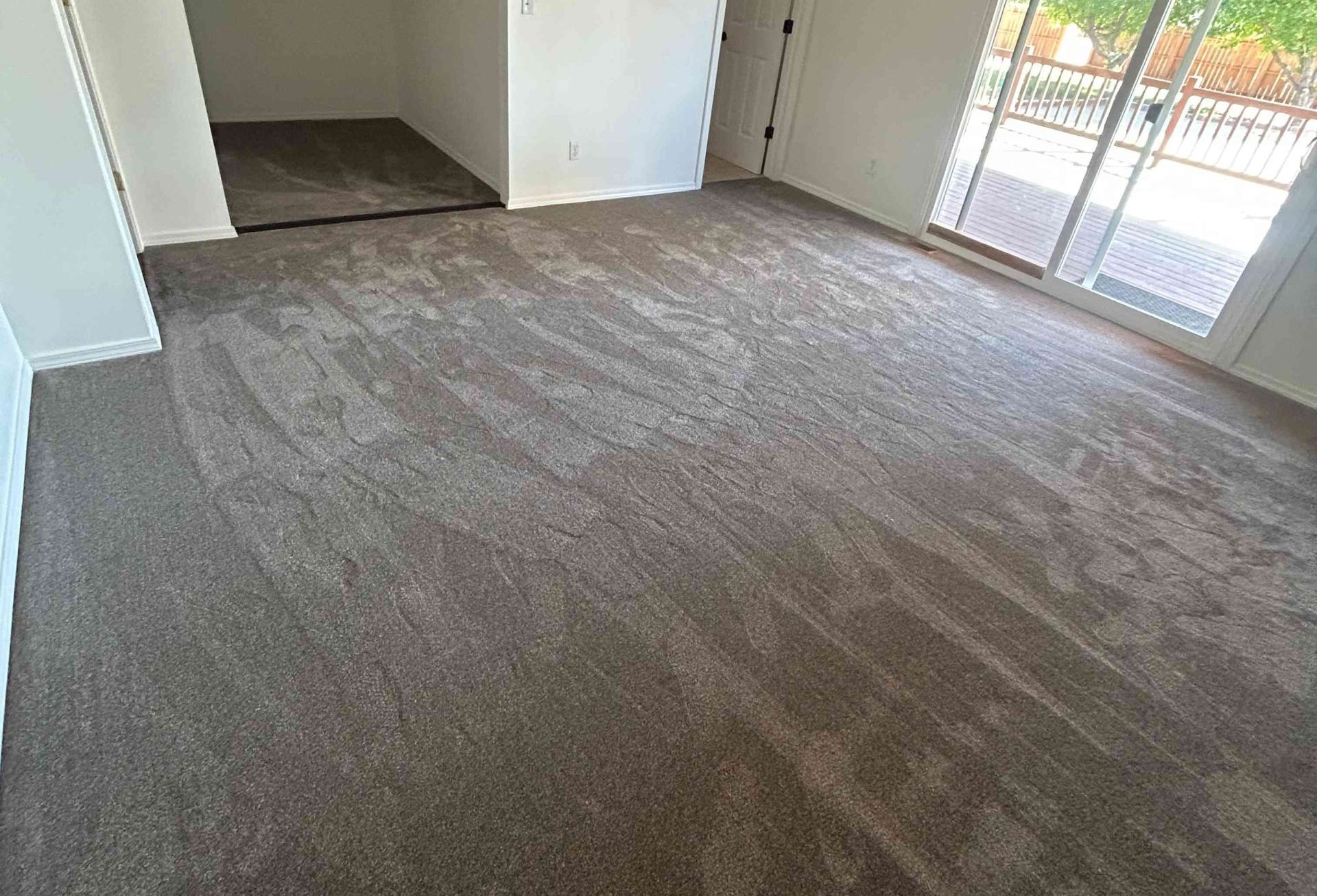
This is the single most common carpet repair issue, and it gets measurably worse over time if ignored. When carpet develops waves or raised ridges that you can feel underfoot or see from across the room, the anchor system has failed. Carpet is held at its perimeter by tack strips: thin wood strips with short, angled pins embedded in the subfloor. When carpet stretches beyond its tensioned state, whether from installation shortfall, age, or humidity cycling, it pulls away from those tack strips and bunches.
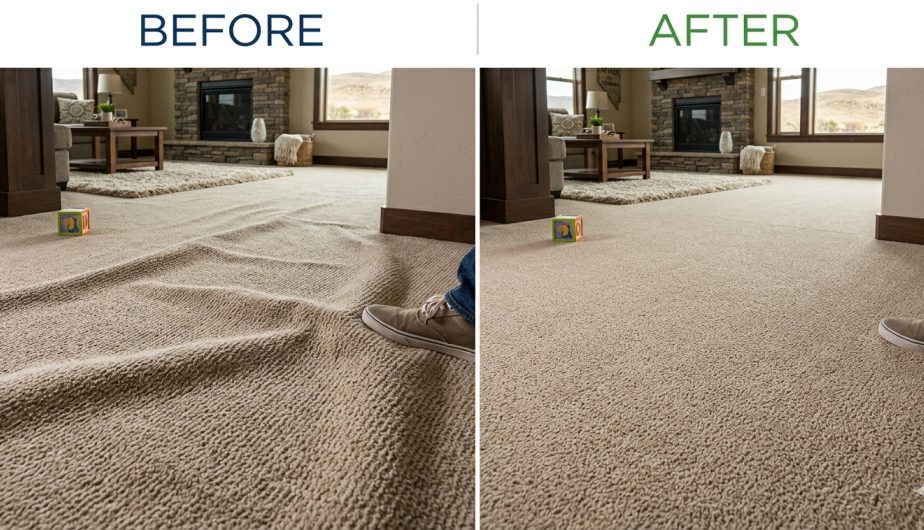
Beyond the obvious visual problem, buckled carpet creates genuine tripping hazards, particularly for children and older adults moving through the space. Small buckles grow into larger ones as the carpet continues to shift freely across the floor. And the longer the carpet remains un-tensioned, the more the backing material deteriorates from constant flex which can eventually make restretching more difficult.
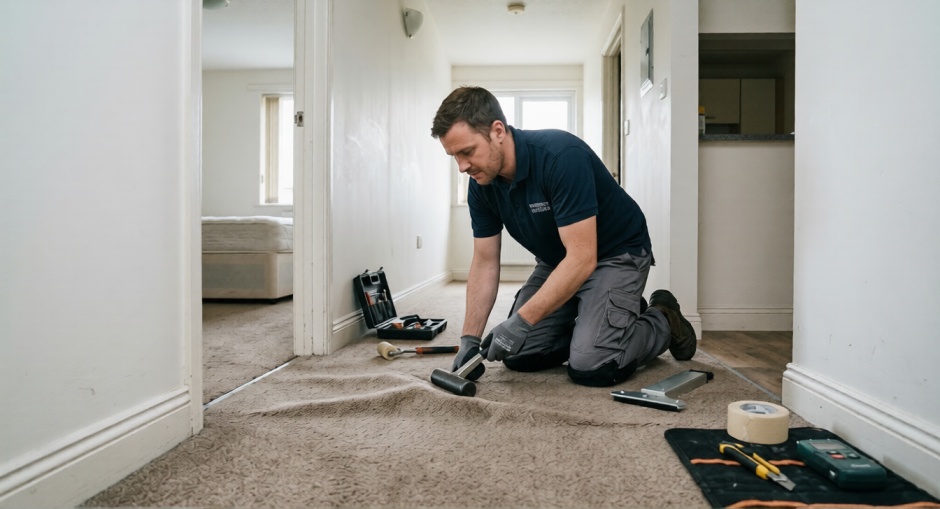
The repair is carpet restretching, performed correctly with a power stretcher (not a knee kicker, which is a common but inadequate shortcut). Done properly, the result holds for years. The mistake is waiting until what started as a single low ridge has become a floor that shifts noticeably underfoot across most of the room.
Don’t wait on this one. Ripples are one of those problems that visibly worsen on a month-to-month basis.
2. Visible or Splitting Seams
Carpet seams are meant to be invisible in normal use. When they’re working correctly, you walk past them without a second glance. When they start to fail, they’re impossible to miss, a visible line where two carpet sections meet, fibers splaying on either side of the join, or in more advanced cases, a gap that’s actively widening.

Seam failure has several causes: original installation technique, traffic patterns that run directly along a seam line, lateral stress from furniture being moved repeatedly across the same path, pet clawing, or simply age and repeated cleaning stress. Any of these can initiate a split that won’t resolve on its own.
The reason to address seam splits promptly is fiber loss. Once a seam opens, the fiber ends on both sides of the gap start to shed and fray. That process doesn’t stop; it progresses as foot traffic works loose fibers from both edges. What begins as a hairline separation can become a gap several inches wide with visible exposed backing if left untouched through a season of normal use.
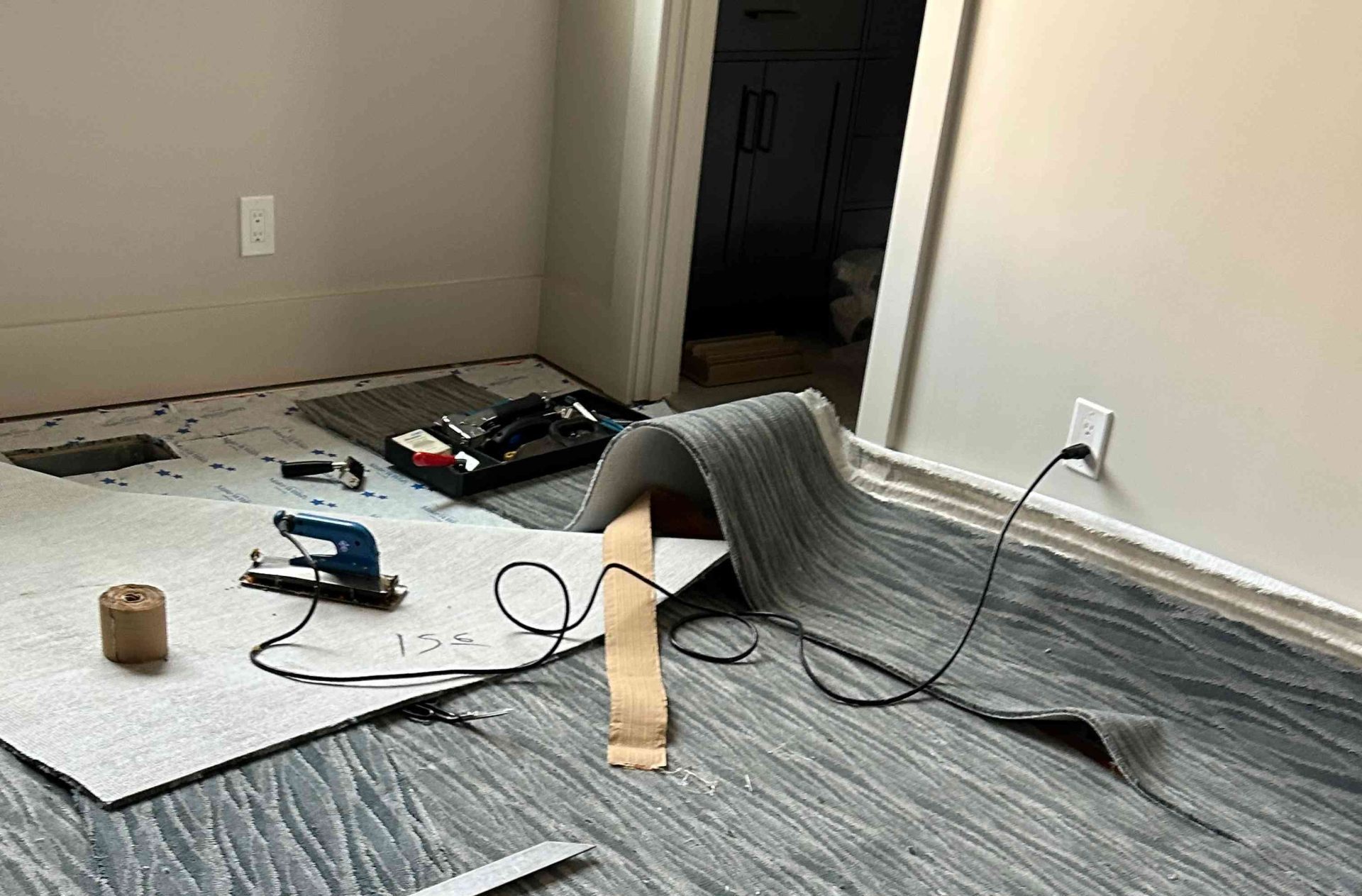
Professional seam repair uses heat-bonded seaming tape and careful pile-direction alignment on both sides of the join. A properly executed seam repair is nearly invisible in natural light and holds for years. A patched-together fix using hardware-store adhesive creates a ridge, remains visible, and typically fails again within months.
3. Fraying or Unraveling Edges at Doorways and Transitions
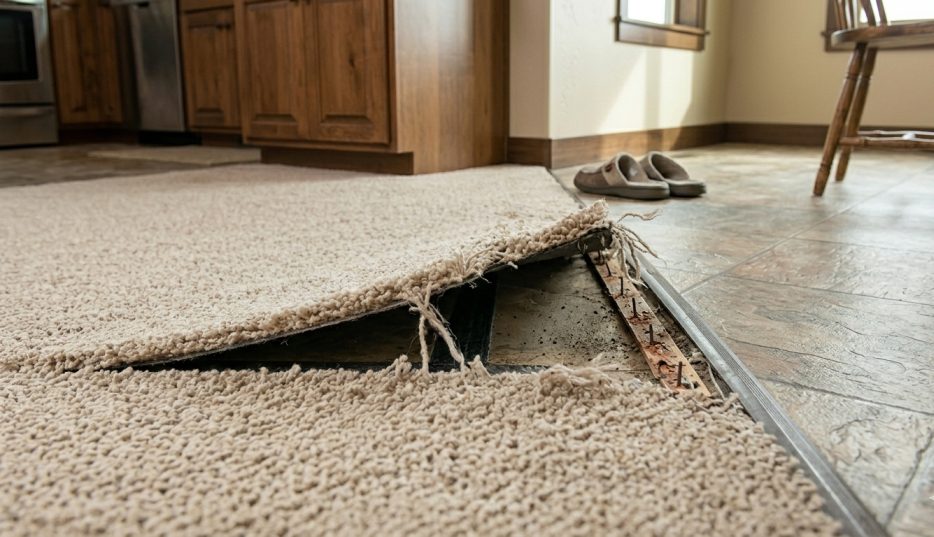
Doorway thresholds and room transitions are where carpet absorbs the most repetitive directional stress, foot traffic, furniture wheels, and door swing friction. This is predictably where edge problems show up first. When the carpet edge at a doorway or transition strip starts to fray, pull back, or unravel, it crosses from a cosmetic issue into a structural early warning.
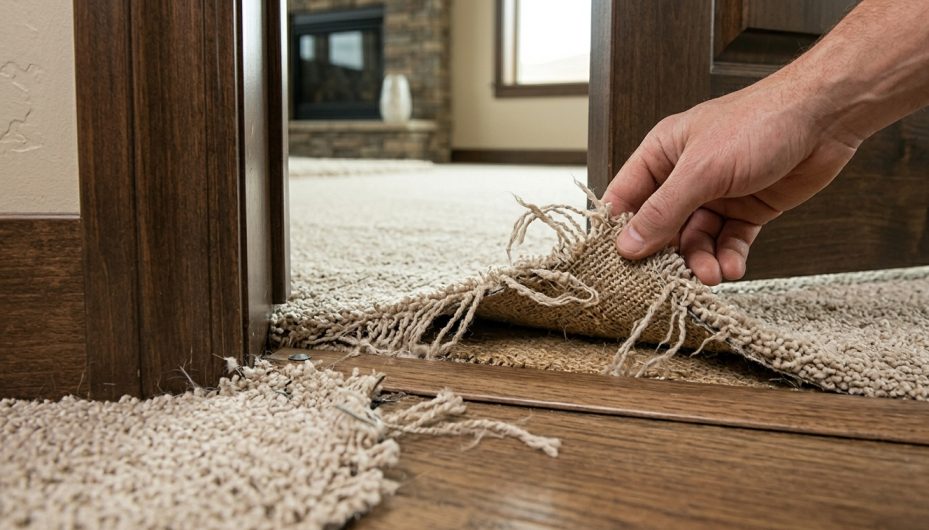
Fraying edges are also where adjacent seam failure typically originates. When the fiber structure at the perimeter breaks down, it creates a weakened zone that spreads inward. Catching it early, before it extends past the transition area into the field of the carpet, is significantly cheaper than addressing it after it has spread.
Northern Nevada’s low-humidity climate is a specific factor here. The dry air that defines Reno and Carson City causes carpet backing to lose moisture and become more brittle over time. This makes edge fraying and delamination (the separation of carpet face from backing) more prevalent in this region than in humid climates. It’s worth examining your doorway edges once a year, particularly in older carpets that haven’t been restretched since installation.
4. Pet Damage — Clawing, Chewing, or Pulled Loops
Homeowners with dogs and cats in Reno and Northern Nevada deal with this more frequently than any other single damage type. Pets target specific spots: doorways where they scratch to be let in or out, corners and edges they can get their claws under, and seams, which dogs in particular seem to find irresistible as a starting point.
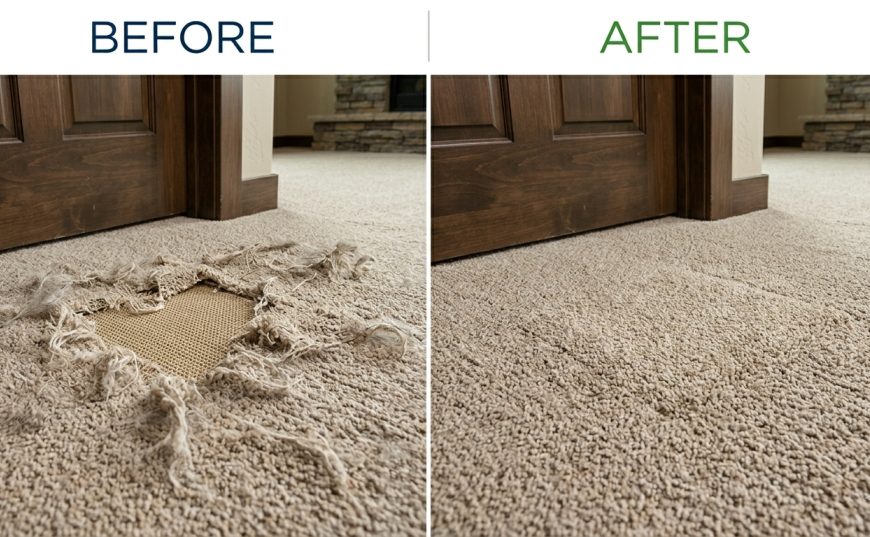
Pet damage presents in several forms depending on carpet type and the pet involved:
- Pulled or snagged loops in Berber or loop-pile carpet, difficult but not impossible to repair depending on extent
- Chewed sections at doorway corners, where the backing may be exposed
- Clawed areas where the pile has been removed and the backing is visible across a several-inch section
- Compacted or matted areas from repeated digging behavior in a fixed spot
The critical timing factor: once the carpet backing is exposed, the damage compounds. Moisture from cleaning, pet accidents, or ambient humidity gets into the backing and deteriorates it from below. Isolated pet damage caught before the backing is compromised is a straightforward patch job. The same area left alone for several months may require a larger section replacement and is more difficult to match visually.
If the damage is contained to one area and the surrounding carpet is in otherwise solid condition, a targeted patch repair is almost always the right call. The cost is a fraction of what even a partial room replacement runs.
5. Permanent Stains in an Isolated Area
There’s an important difference between carpet that looks dingy and worn throughout, which is a replacement conversation, and carpet that has a specific, localized stain in an otherwise clean and presentable field. The latter is a patch repair conversation, not a replacement one.
Stains that resist professional cleaning include: pet urine that has penetrated through to the pad and subfloor, bleach or chemical spills that have altered the dye structure, rust from furniture feet, and certain food or organic stains that have set over time. No amount of cleaning will resolve these because the issue is in the fiber or pad beneath the surface.
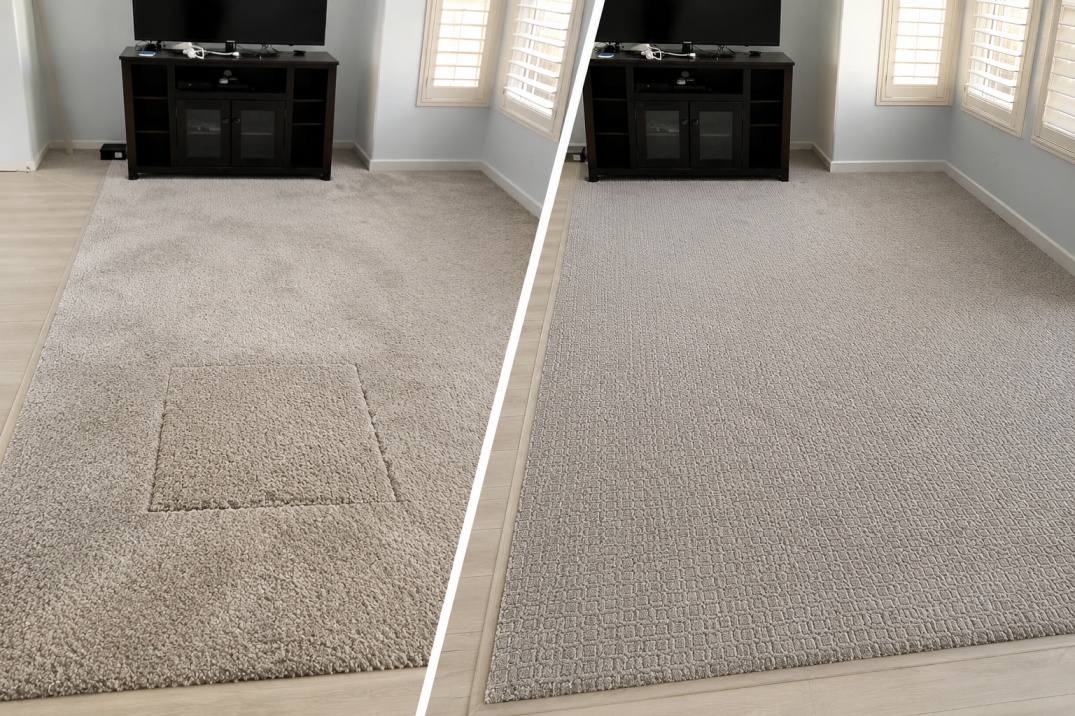
When cleaning hasn’t resolved a specific area after one or two professional cleaning sessions, the correct next step is a patch repair, not another cleaning attempt. A skilled technician removes the damaged section and replaces it with closely matched material, re-bonding the edges for a result that is clean and presentable, even if not always completely invisible.
Acting on this when the stain is isolated saves you from replacing an entire room when only a small section is actually compromised.
6. Carpet Is Lifting or Loose Along Room Edges
Along the perimeter of any carpeted room, carpet is anchored to tack strips embedded in the subfloor. When those tack strips lose their grip, through pin wear, wood deterioration from moisture, or the strip pulling from the subfloor, the carpet edge lifts, sometimes exposing the tack strip and its pins beneath.
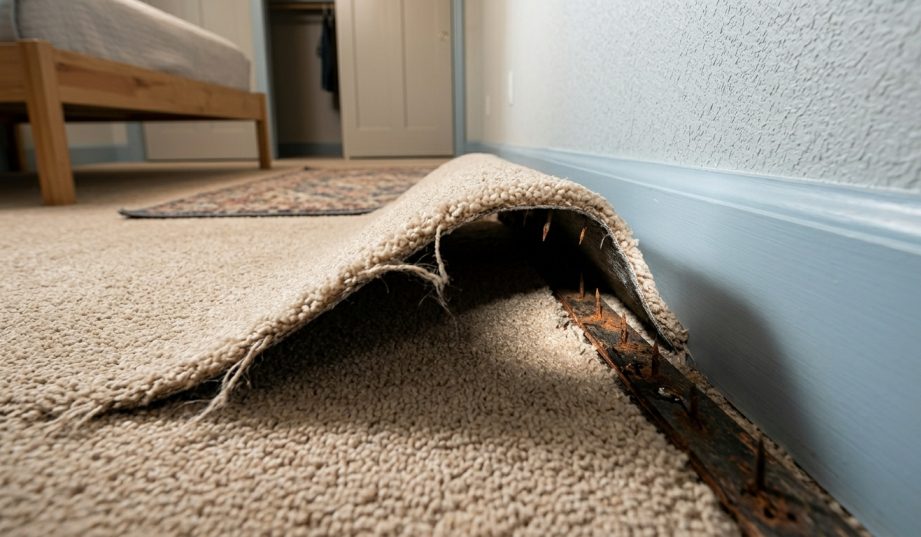
This is both a safety issue, exposed tack strip pins at a room’s edge are a real injury risk in bare feet, and a signal that the carpet has lost tension across the broader floor. A single lifted corner doesn’t necessarily mean the whole room needs full restretching, but it does mean the anchor system needs attention before the lifting spreads.
In rooms with radiant floor heating, or rooms that see significant temperature and humidity cycling common in Northern Nevada’s high desert climate, tack strip degradation happens more frequently than in climate-controlled spaces. Checking room edges periodically is a simple maintenance habit that catches problems while they’re still inexpensive to fix.
7. You’re Preparing to Sell and the Carpet Is Hurting Presentation
This sign is practical rather than structural, but it matters. Buyers touring homes in the Reno and Northern Nevada market consistently react to carpet issues by mentally calculating replacement costs and subtracting that number from their offer. A visibly buckled room or a split seam in a hallway can cost you $1,500–$4,000 in negotiated price reduction, even when everything else about the home is solid.
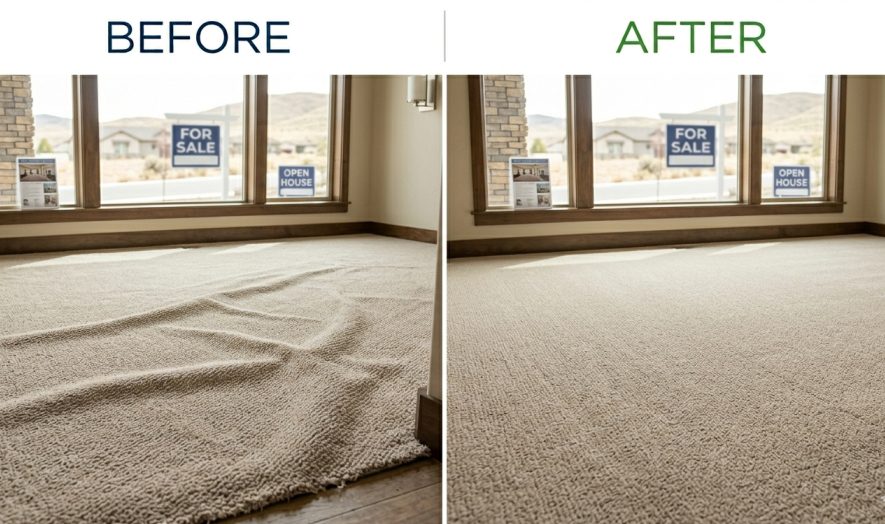
Before listing a property with carpeted rooms, a professional carpet inspection is one of the highest-return pre-sale investments available. If the carpet is otherwise in reasonable condition, a restretch eliminating visible buckles, or a seam repair removing an obvious split, can make the carpet present acceptably without the cost or timeline of full replacement.
This applies to rental property owners as well. Carpet that presents poorly between tenants triggers replacement discussions and security deposit disputes. Minor repairs between tenancies, restretching, seam fixes, targeted patches, extend carpet life and reduce full replacement frequency significantly.
FREQUENTLY ASKED QUESTIONS
How do I know if my carpet needs restretching or full replacement?
If your carpet is buckling or rippling but still looks acceptable overall and is less than 12–15 years old, restretching is almost always the right call. If the carpet is uniformly worn, heavily faded, or damaged throughout the room or floor, replacement may be more appropriate. A professional on-site assessment gives you a clear, honest answer for your specific situation.
Can pet claw damage be repaired without replacing the whole room?
In most cases of isolated pet damage, yes, a targeted patch repair is the right approach. The key factors are the size of the damaged area and whether the carpet backing beneath it has been compromised by moisture or repeated pet activity. Small, contained damage caught early is a straightforward repair. Larger or backed-damaged areas require a more extensive section replacement.
How much does it cost to fix carpet ripples in Reno, NV?
Carpet restretching in the Reno and Northern Nevada area typically runs $150–$300 for a single room. Multi-room projects are priced by scope. Carpet Repair Service pricing starts from $175, with a $49.95 assessment fee credited against the final invoice.
Why does carpet buckle in the first place?
Most buckling results from insufficient tension during the original installation, the most common cause in any market. In Northern Nevada specifically, low humidity can also cause carpet backing to dry out and pull slightly over time, which compounds installation shortfalls. Delamination of the secondary backing is more common in dry climates for related reasons.
Is a visible seam always a sign it needs repair?
Not necessarily. Some seam visibility is normal in certain lighting or carpet types, particularly loop pile and Berber. However, if the seam is spreading, fibers are being lost along the split, or you can catch the carpet edge with your foot at the seam line, it should be repaired promptly to prevent the split from widening.
How soon should I act on carpet fraying at doorways?
As soon as you notice it, not because it’s urgent in the next 24 hours, but because edge fraying progressively extends into the carpet field and becomes more expensive to address the longer it’s left. Catching it while it’s limited to the transition zone is a minor repair. Waiting until it’s six inches into the room turns it into a larger seam repair job.
Spotted one or more of these signs in your carpet? Don’t wait for a small problem to become an expensive one. Our team serves Reno, Sparks, and Carson City. Book an inspection, and we’ll give you a straight, honest answer on what your carpet actually needs.